

Buying Guides
Match the robot
to the pool.
161 guides
By size · surface · debris · budget
Start with the pool
One pool. One answer.
Each guide takes one question: a pool this long, this surface, this shape, this kind of debris. It ranks the robots for that job, gives the reason for the order, and says where each one stops.
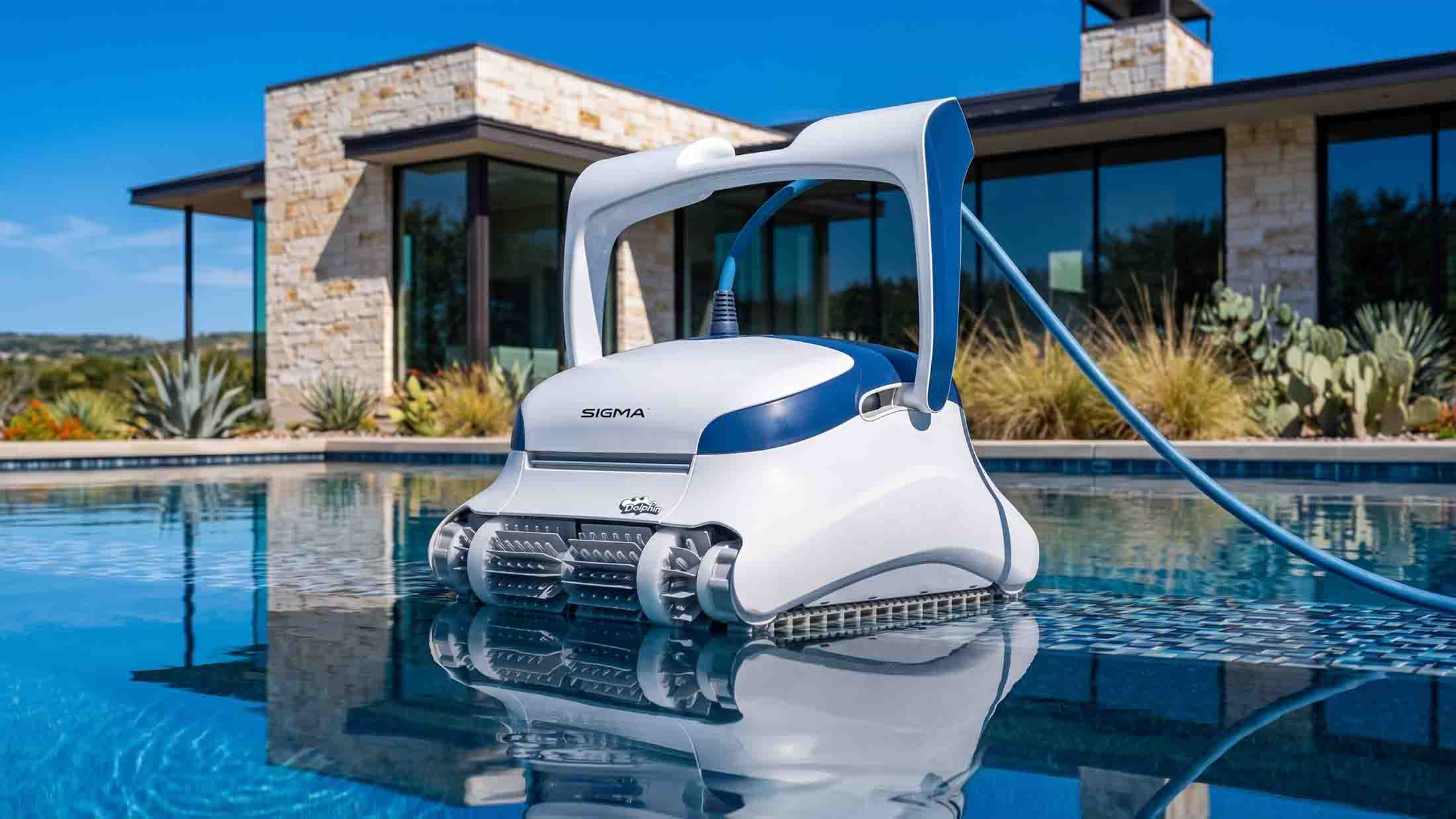
We sell five Dolphin robots and built this site around one, the Sigma: three commercial-grade motors, quad scrubbing brushes, a gyroscope. Some pools use all of it. Some do not, and the guide names the robot that fits instead.
By pool size in gallons.
10 guides
- 5,000-gallon poolsAt 5,000 gallons every robot in this guide is overqualified, so the decision comes down to pool type, what you want scrubbed, and how little you need to spend.Top pick: Escape
- 10,000-gallon poolsA 10,000-gallon pool sits comfortably inside the range of every robot in this guide, which turns the choice into a short list of wants rather than needs.Top pick: Cayman
- 12,000-gallon poolsAt 12,000 gallons the pool fits every robot in this guide, so the real decision is coverage: floor and walls, or floor, walls and the waterline as well.Top pick: Cayman
- 15,000-gallon poolsFifteen thousand gallons is where the Dolphin range forks: a floor-and-wall robot near the top of its rating, or a full-coverage robot with room in hand.Top pick: Quantum
- 18,000-gallon poolsA 16 x 32 ft pool runs within a foot of the smaller robots' limit, so the sound choice is a robot rated for 50 ft, and the question becomes which one.Top pick: Quantum
- 20,000-gallon poolsAt 36 ft a 20,000-gallon pool is beyond the smaller robots' rating, which leaves three 50 ft robots and one narrow exception worth stating plainly.Top pick: Quantum
- 25,000-gallon poolsWith around 1,300 sq ft of floor and wall to cover, a 25,000-gallon pool is the size at which brush count, cycle time and filter capacity begin to decide the result.Top pick: Sigma
- 30,000-gallon poolsThirty thousand gallons is the standard 20 x 40 ft in-ground pool, and it calls for a 50 ft rating, waterline scrubbing and a cycle long enough to finish both floor and walls.Top pick: Sigma
- 40,000-gallon poolsThe extra water in a 40,000-gallon pool is mostly depth or length, and both put more wall, more cable and more cycle time between you and a clean pool.Top pick: Sigma
- 50,000-gallon poolsAt 50,000 gallons a pool is at or past the 50 ft maximum rating of every robot in these guides, so the first tool you need is a tape measure.Top pick: Sigma
By pool length and dimensions.
14 guides
- Small poolsA pool of 30 ft or less does not need a 50 ft machine: it needs the right pool-type rating, a short cycle and a robot that is easy to lift.Top pick: Cayman
- Large poolsAt 40 to 50 ft a robot runs short of cable, cycle time or filter space before it runs out of pool, and only three of the five Dolphins here are rated for the job.Top pick: Sigma
- 10-foot poolsIn a stock tank, a small round or a plunge pool a robot is optional, so the right one is the lightest and simplest that fits ten feet of water.Top pick: Escape
- 15-foot poolsFifteen feet is the most common round above-ground size and one robot is built around it, while a 15 ft in-ground pool gets a different answer.Top pick: Escape
- 20-foot poolsAny robot in this guide will clean 20 ft of pool, so the useful question is which features the pool will actually use, and the answer starts low on the price list.Top pick: Cayman
- 25-foot poolsTwenty-five feet usually means a 12 x 24 in-ground rectangle or a 24 ft above-ground round, two pools that share a length and little else, so the pick depends on which you own.Top pick: Cayman
- 30-foot poolsThirty feet is three feet under the ceiling of the smaller robots here: they are rated for it, but the margin is thin, and this is where a 50 ft robot starts to make sense.Top pick: Quantum
- 35-foot poolsAt 35 ft the smaller robots are out by two feet and there is no size in between, so the choice is among three 50 ft robots, and the differences are real.Top pick: Sigma
- 40-foot poolsA 20 x 40 has 800 square feet of floor, 120 feet of waterline and a deep end that uses cable, so the robot's rating matters and so does where you plug it in.Top pick: Sigma
- 50-foot poolsFifty feet is the limit of every robot in these guides, not the middle of the range, so the outlet, the schedule and an honest tape measure matter as much as the robot.Top pick: Sigma
- 60-foot poolsEvery robot in this guide stops at 50 feet of pool length. Here is what a 60-foot pool really needs, and the closest workable fit if you stay residential.Top pick: Sigma
- 65-foot poolsAt 65 feet, none of the robots in this guide is the right tool. This page says what is, then lays out the two-zone routine for owners who stay residential anyway.Top pick: Sigma
- Olympic-size poolsA true Olympic pool is far outside every robot in this guide. If yours is really a long backyard lap pool, the answer changes, and this page sorts out which you have.Top pick: Sigma
- Sizing guide by pool dimensionsRobots are sized by the longest straight run of water, not by gallons. Find your pool's dimensions below and see which robots are rated for it.Top pick: Sigma
By pool surface.
12 guides
- Vinyl liner poolsA vinyl liner is soft, seamed and slick. Here is what that asks of a robot, which four Dolphins we recommend, and what none of them will do for a wrinkle.Top pick: Sigma
- Fiberglass poolsGelcoat is the smoothest surface a robot will meet. That makes cleaning easy and climbing hard, and it puts molded steps and ledges at the center of the choice.Top pick: Sigma
- Gunite poolsGunite gives a pool its shape; plaster, pebble or tile gives it a surface. Both decide which robot can scrub it for years without wearing out early.Top pick: Sigma
- Concrete poolsConcrete is the roughest surface a pool robot works on. This page ranks four Dolphins for it and says which ones actually name concrete in their published surface lists.Top pick: Sigma
- Plaster poolsPlaster changes over its life: dusty when new, smooth in its prime, rough when etched. The right robot, and the right filter, depend on where yours is.Top pick: Sigma
- Pebble Tec and pebble finishesA pebble finish is thousands of small valleys. The robot that cleans it best is the one that gets brushes and water flow down into them, cycle after cycle.Top pick: Sigma
- Tile poolsTile is slick, its grout holds dirt, and the waterline band shows every film. Here is which robot handles all three, and where a cheaper one is enough.Top pick: Sigma
- Glass tile poolsA clean robot brush will not scratch glass tile. Whether the robot holds the upper wall is a separate question, and it deserves a straight answer.Top pick: Sigma
- Aggregate finishesAggregate is a family of finishes, from foot-scuffing exposed stone to polished surfaces as smooth as plaster. The right robot is the one matched to your texture.Top pick: Sigma
- Painted poolsAging pool paint sheds a fine white powder that standard filters pass straight back into the water. Filtration decides this page; everything else is secondary.Top pick: Sigma
- Stainless steel poolsA steel pool is a smooth, hard shell that no robot here names on its surface list. These are the closest matches, with the checks to make first.Top pick: Sigma
- Above-ground vinyl poolsA thin liner over sand needs a robot built for it: light, rated for above-ground walls, and quick enough for a small pool. Two of the five Dolphins here qualify.Top pick: Escape
By debris and dirt problem.
21 guides
- LeavesAny robot can lift a leaf. The question is where the fortieth leaf goes. Collection space and easy emptying decide this ranking, not motor power.Top pick: Premier
- Heavy leaf loadsUnder heavy tree cover the filter will fill before the cycle ends. Pick the robot that holds the most and restarts fastest, then work to a plan.Top pick: Premier
- Large debrisSeed pods, blossoms, small sticks and mulch need room, not finer filtration. Here is which robot swallows the most, and what still has to come out by hand.Top pick: Premier
- Fine debrisSilt, dust, pollen and dead algae slip through ordinary filter panels and settle again overnight. Only ultra-fine media keeps them, and it asks for a rinse in return.Top pick: Sigma
- DirtLoose dirt is easy for any robot. Dirt pressed onto the floor, and the brown haze that slips through a coarse filter, are where these four Dolphins separate.Top pick: Sigma
- SandSand is dense, abrasive and quick to sink. Picking it up takes flow at the floor, brushes that sweep, and a filter you can still lift when it is full.Top pick: Sigma
- Fine sandPlay sand and desert sand go straight through a standard panel. The right robot is the one with ultra-fine media in the box, used with the pump off.Top pick: Sigma
- SiltSilt is finer than sand and far harder to pin down. Clearing it takes ultra-fine filters, still water and more than one cycle. Here is which robot, and when not to use one.Top pick: Sigma
- DustDust never arrives once. It arrives a little every day. The robot that wins is the one that filters ultra-fine and runs on a schedule without being asked.Top pick: Sigma
- PollenPollen is a two-stage problem. The skimmer takes it while it floats. A robot with ultra-fine filters takes it after it waterlogs and settles. Here is which robot.Top pick: Sigma
- AlgaeA robot will not kill algae or stand in for chlorine. It will brush the surfaces algae clings to and filter out what treatment kills. Brush count and filter grade decide the ranking.Top pick: Sigma
- Dead algaeThe shock worked. Now a gray-white dust covers the floor and clouds at a touch. Collecting it takes the finest filter media a robot offers, and a settled pool.Top pick: Sigma
- Mustard algaeMustard algae is cured with chemistry, not machinery. A robot's part is daily wall scrubbing afterward, and it must be washed itself, or it puts the algae back.Top pick: Sigma
- AcornsAcorns are a capacity problem with a deadline: they fill filters fast and stain if they sit. The right robot has an open filter, strong flow and a daily timer.Top pick: Premier
- Pine needlesNeedles are thin, springy and constant, so the right robot traps them in a bag or fine mesh, empties in seconds and runs daily before they mat.Top pick: Premier
- TwigsLength is the problem with sticks, so this guide ranks four Dolphins by the collection space they offer and tells you which twigs to net by hand first.Top pick: Quantum
- BugsInsects fall in every night and sink by morning, which makes this a question of schedules and fine filters more than raw cleaning power.Top pick: Sigma
- Pet hairWhen a dog swims, the pool gets hair, dander, dirt and oils, and the best robot is the one whose filter and brushes are quickest to clear.Top pick: Quantum
- Grass clippingsMowing day drops a burst of thin blades that float, sink in clumps and stain, so capacity, mesh and timing decide which robot handles it best.Top pick: Premier
- Oak leavesAn oak gives a pool three seasons of different debris, so the best robot is the one that changes its filter as the tree changes its output.Top pick: Premier
- Palm tree debrisPalms drop seeds, flower litter, fibers and fronds, and a robot handles only some of them, so this guide ranks four Dolphins and marks the limits.Top pick: Quantum
By pool shape and design.
15 guides
- Rectangular poolsA rectangle is the easiest shape a robot will ever clean, so the real questions are how long the pool is and how well the corners get scrubbed.Top pick: Sigma
- Round poolsRound pools are nearly all above-ground, with one curved wall and no corners, so the right robot is above-ground rated and its cable is kept from coiling.Top pick: Escape
- Oval poolsAn oval is a rectangle with the corners removed, easy for any robot, so the choice turns on pool type, true length and where the outlet sits.Top pick: Cayman
- Kidney-shaped poolsA kidney has one wall that curves inward and no two walls parallel, so this guide ranks four Dolphins by how evenly they cover both lobes.Top pick: Sigma
- Freeform poolsNo two freeform pools match, so we rank four Dolphins on what every freeform shares: walls that never run parallel, constant turning and at least one shelf or cove.Top pick: Sigma
- Irregular-shaped poolsFor pools with a peninsula, an island, a connecting channel or a second floor level, we rank four Dolphins on how well they find their way around the obstruction.Top pick: Sigma
- L-shaped poolsTwo measurements and one placement decide whether a robot covers both legs of an L, and this guide walks through all three before ranking four Dolphins.Top pick: Sigma
- Grecian poolsClipped corners make a Grecian pool easier for a robot than a square-cornered rectangle, so the real choice is about length, liner and how much machine you want.Top pick: Sigma
- Lagoon poolsA lagoon is the hardest backyard pool for a robot, so this guide names three that suit one up to 50 ft and is plain about the rockwork, shallows and length they cannot handle.Top pick: Sigma
- Infinity and vanishing-edge poolsWith the edge pump off, a robot turns back at the waterline short of the lip, but it will not clean the catch basin: here is what four Dolphins do and what stays manual.Top pick: Sigma
- Lazy riversNone of these robots is designed for a lazy river, so this page explains how the three nearest fits can clean a small backyard one in sections, and where that stops.Top pick: Sigma
- Narrow poolsA pool 6 to 10 ft wide is mostly wall and makes a robot turn more than any other shape, which puts the swivel cable ahead of every other feature.Top pick: Sigma
- Lap poolsA lap pool is bought by its length and a robot has to be too, so this guide sorts 40, 50 and 75 ft lap pools into what three Dolphins can and cannot cover.Top pick: Sigma
- Plunge poolsA plunge pool is mostly wall, a little floor and often a bench. Here is which Dolphin fits that shape, and why the biggest robots in these guides do not.Top pick: Cayman
- SpoolsA spool is half spa, half pool, and most of it is seating. This guide shows which Dolphin suits it, what each one reaches and when no robot is needed.Top pick: Cayman
By steps, ledges and tricky features.
14 guides
- Stairs and stepsRobots clean the lower steps and usually leave the top one. Here is the one Dolphin that lists stairs as coverage, and how the others treat them.Top pick: Quantum
- Tanning ledges, Baja shelves and sun shelvesOne Dolphin lists the shelf as coverage. The other two picks are for the pool beyond it, and we say so plainly.Top pick: Quantum
- Shallow waterA pool that is 3 to 4 ft deep throughout and a ledge under 18 inches are different problems. This guide answers both and names the robot for each.Top pick: Quantum
- Deep poolsA diving-depth pool asks more of a robot's cable, its grip and its cycle than a flat one does. Here is how to choose for 8 ft and deeper.Top pick: Sigma
- Sloped floorsTracks climb a slope without trouble. Staying on course across it is the real test, and it is where one robot in this guide is built differently.Top pick: Sigma
- Deep endsLeaves, acorns and silt all slide to the lowest point of the pool. The right robot has the capacity, the time and the cable slack to deal with them there.Top pick: Sigma
- Uneven floorsNo robot levels a floor. The right one rides over dips, wrinkles and patches without stalling, and is light enough for the base beneath it.Top pick: Sigma
- Main drainsDome covers, flat grates and paired drains each ask something different of a robot. Here is which Dolphin handles them, and what to check on the drain itself.Top pick: Sigma
- Robots that don't get stuckNo robot is immune to stalling. Most stalls trace to five causes, and hardware answers three of them: a swivel cable, navigation that recovers and a filter that warns you.Top pick: Sigma
- Tight cornersA robot does not fit into a corner. It reaches one with brush width and repeated passes from different angles, so this ranking follows brush count, cycle length and navigation.Top pick: Sigma
- Curved wallsA curved wall never lets a robot drive straight or turn both ways equally. That is a cable problem and a navigation problem, and the picks are ranked on both.Top pick: Sigma
- BenchesA bench is a narrow shelf halfway up a wall, about 18 inches under water. One robot here lists shelves and stairs in its coverage, and three clean around the seat.Top pick: Quantum
- Swim-outsA swim-out packs a seat, a step and three inside corners into one deep-end recess. Here is which robot handles the most of it, and which part stays yours.Top pick: Quantum
- Beach-entry poolsA zero-entry slope ends in water too shallow for any robot. These four clean the slope up to that point; this page shows where the point is and who goes furthest.Top pick: Sigma
By pool type and installation.
16 guides
- In-ground poolsFour Dolphins suit in-ground pools, and they divide cleanly: one line at 33 feet, another at the waterline. This overview shows which side of each your pool falls on.Top pick: Sigma
- Above-ground poolsOnly two of the five Dolphins compared in these guides are rated for above-ground pools. Here is how to choose between them, and how to set either one up.Top pick: Escape
- Semi-inground poolsA semi-inground pool looks in-ground and is built above-ground. Choose the robot by how the pool is made, not by how it sits in the yard.Top pick: Cayman
- Saltwater poolsEvery robot here is made for a salt pool. What separates them is waterline scrubbing, warranty length, and how well you rinse the machine afterward.Top pick: Sigma
- Chlorine poolsEvery robot here is built for normal chlorine levels, so the choice comes down to pool size, debris and how you treat the machine on shock day.Top pick: Sigma
- Natural poolsNo Dolphin here is published as approved for a natural swimming pool, but a robot can keep the lined swimming zone clear of sediment and biofilm if you set firm boundaries.Top pick: Sigma
- Indoor poolsNo leaves fall indoors. The load is dust, hair, lint and an oily waterline, so ultra-fine filtration and brush count decide this, not basket size.Top pick: Sigma
- Outdoor poolsAn outdoor pool changes its debris with the weather, so the right robot is the one whose filters, brushes and schedule cover the whole calendar.Top pick: Sigma
- Heated poolsWarm water grows biofilm faster and marks the waterline sooner, so a heated pool needs frequent scheduled cycles, real scrubbing and a robot covered for heavy use.Top pick: Sigma
- Cold waterCold water does not change which robots are good. It changes the debris they face and the checks you make before the first cycle of the year.Top pick: Sigma
- Soft-sided poolsThin liners, flexible walls and shallow water rule out most robots. Two Dolphins are rated for above-ground pools, and for some soft-sided pools the honest answer is neither.Top pick: Escape
- Steel-wall poolsSteel wall describes two different pools that share one thing: a vinyl liner. The robot only ever touches the liner, so identify which pool you have, then size the robot.Top pick: Cayman
- Intex poolsIntex pools run from 8 ft ring pools to 32 ft frame pools, and a robot suits only part of that range. Here is where the line falls, and which Dolphin to choose.Top pick: Escape
- Bestway poolsBestway's range spans inflatable Fast Set rings, tube-frame pools and steel-wall Hydrium models. Two above-ground-rated Dolphins cover the ones worth automating.Top pick: Escape
- Coleman poolsA Coleman frame pool has a thin liner, walls 42 to 52 inches tall and a small filter pump. Two light Dolphins suit it. The three big ones do not.Top pick: Escape
- Endless PoolsAn Endless Pool is about 8 by 15 ft with a current unit at one end. That calls for a small robot, a few checks, and some hand cleaning.Top pick: Cayman
By feature.
21 guides
- Waterline cleaningThe waterline is where oils, sunscreen and pollen dry into a visible band. Three Dolphins climb to it and scrub along it. Two stop short.Top pick: Sigma
- Wall climbingAll five Dolphins climb. Three reach the waterline and two stop below it. Grip, flow and a clean filter decide whether any of them stays on the wall.Top pick: Sigma
- Weekly timerA timer cleans the pool whether or not anyone remembers. Four Dolphins have one built in, and no two of them work quite the same way.Top pick: Sigma
- Automatic schedulingA repeat timer says how often. A schedule says when. Here is which Dolphin gives you which, and the three situations where the hour matters.Top pick: Sigma
- Wi-Fi and app controlWiFi lets you start, schedule and check on a robot from a phone. It does not empty the filter. Two Dolphins have it, and three do without.Top pick: Sigma
- BluetoothBluetooth connects your phone straight to the power supply at the pool, with no router in between. One robot here has it. The runner-up uses Wi-Fi instead.Top pick: Sigma
- Ultra-fine filtersUltra-fine filters hold the particles that make water look dull. They also clog faster. Here is which Dolphin handles that trade best.Top pick: Sigma
- NanoFiltersThree Dolphins ship with NanoFilters and two take them as an add-on. The format, the spare media and the upkeep differ on every one.Top pick: Sigma
- Large filter basketBasket capacity sets how long a robot keeps collecting before flow drops, so we rank four Dolphins on volume and say plainly where our flagship trades capacity for fineness.Top pick: Quantum
- Dual brushesSuction only collects what is already loose, so brush count decides what a robot can lift off plaster, pebble and tile, and three of the five Dolphins in these guides qualify.Top pick: Sigma
- Active brushesAn active brush scrubs because it turns faster than the robot travels, and how each Dolphin gets its scrubbing, by speed or by brush count, decides which one fits your surface.Top pick: Sigma
- TracksTracks beat wheels on slopes, walls and slick liners, but every Dolphin compared here has them, so the real choice comes down to coverage, pool size and price.Top pick: Sigma
- Swivel cableEvery turn a robot makes puts a little twist into its cable, and a swivel is the part that lets the twist out before it coils, drags and pulls the robot off course.Top pick: Sigma
- Strong suctionSuction in a robot is water moved through the filter each hour, so we rank four Dolphins on published flow and then explain what a GPH figure cannot tell you.Top pick: Sigma
- Smart navigationNavigation is the difference between a robot that covers every square foot and one that polishes the same strip, so we rank four Dolphins on how they find their way.Top pick: Sigma
- GyroscopeA gyroscope tells a robot which way it is pointing and how far it has tilted, and among the five Dolphins compared here exactly one carries it.Top pick: Sigma
- Remote controlNone of these robots comes with a handheld remote, so remote control means a phone app, and two of the Dolphins compared here have one worth choosing between.Top pick: Sigma
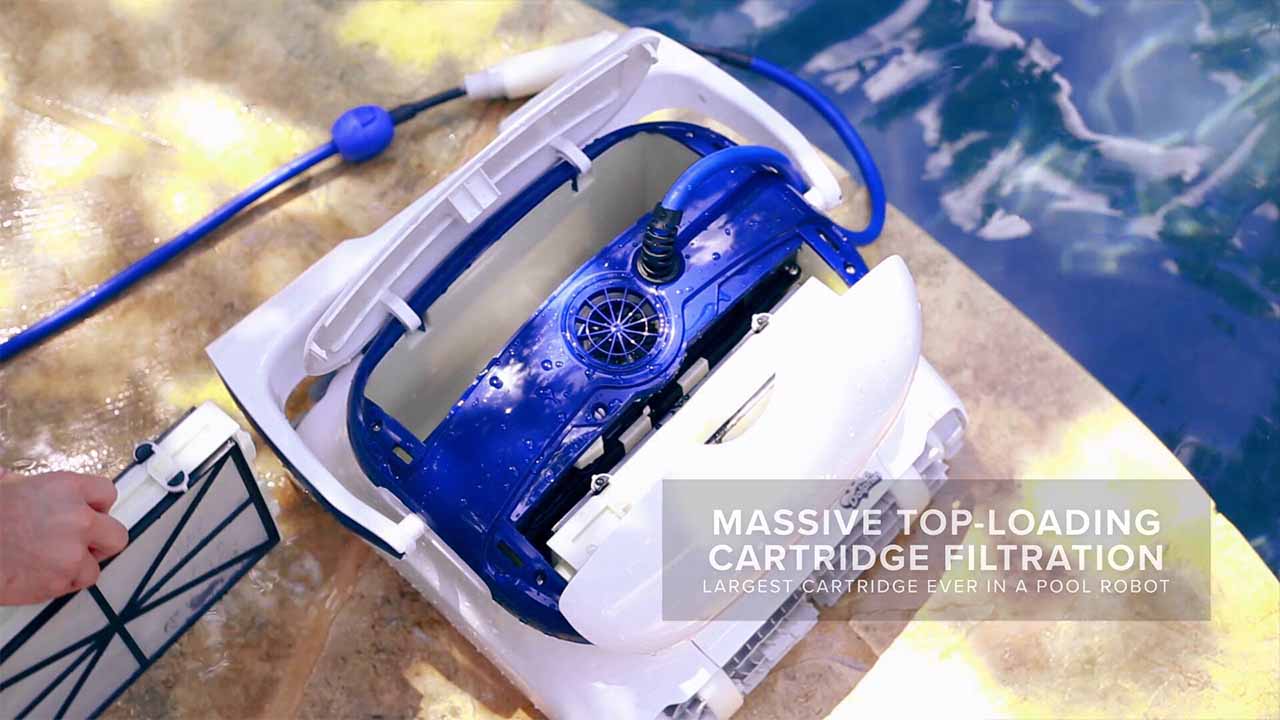
- Top-load filter accessEmptying the filter is the one job a robot leaves you, so we rank four Dolphins on how quick and clean that job is, lifting weight included.Top pick: Quantum
- CaddyNo robot here ships with a caddy, so this guide ranks four Dolphins by how much a separately sold caddy improves carrying, storage and cable care.Top pick: Sigma
- Long warrantyYears of coverage are the headline and the terms are the substance; here are four Dolphins ranked on both, with a plain reading of the fine print.Top pick: Sigma
- Automatic waterline parkingNone of these robots parks itself at the waterline, so this guide ranks them by what that feature is really for: getting the robot out of the pool easily.Top pick: Cayman
Corded, cordless and convenience.
12 guides
- Corded robotsA cord means constant power, long cycles and timers; this guide ranks four corded Dolphins by capability and shows how to make the cable a non-issue.Top pick: Sigma
- Cordless and battery robots
- No chargingNo charger, no battery, no waiting: four plug-in Dolphins ranked for owners who want a robot that is ready every time the pool needs it.Top pick: Quantum
- Daily cleaningShort, frequent cycles keep debris from settling; these four Dolphins can run every day on their own, and this guide shows which suits your pool.Top pick: Sigma
- Automatic cleaningSuction, pressure and robotic cleaners are all called automatic, but only one kind starts itself; here are four Dolphins ranked by how little they ask of you.Top pick: Sigma
- Hands-free cleaningA hands-free robot starts itself, covers floor, walls and waterline without help, and goes days between emptying; four Dolphins measured against that standard.Top pick: Sigma
- Vacation homesFor a pool you visit rather than live beside, the right robot starts from your phone before you arrive, and the right routine keeps it out of the water while you are gone.Top pick: Sigma
- Rental propertiesA rental pool is judged in the first minute of every stay; these four Dolphins are ranked for owners and turnover crews who need it clean on a deadline.Top pick: Sigma
- Easy to use (older owners)Three moments decide whether a pool robot is easy to live with: lifting it out, emptying the filter and starting a cycle. We rank four Dolphins on exactly those.Top pick: Cayman
- Lightweight robotsPublished weights for five Dolphins run from 14.2 lb to 24.6 lb. Here is what each pound buys, and where the lightest robots stop.Top pick: Cayman
- Whole-pool coverageWhole-pool cleaning has a precise meaning: floor, walls and waterline. Three Dolphins do all three. Here is how they rank, and the short list of places no robot reaches.Top pick: Sigma
- Unattended cleaningA robot that works while you are at the office or asleep needs four things: a schedule, sound navigation, a cable that will not knot, and a way to report a full filter.Top pick: Sigma
By budget.
14 guides
- Under $300No robot we recommend sells for less than $300. This page explains what that budget buys elsewhere, what it leaves out, and the nearest robot we would stand behind.Top pick: Escape
- Under $500Nothing recommended here lists under $500. The Dolphin Escape is the nearest, and this page helps you decide whether the stretch suits your pool.Top pick: Escape
- Under $600A $600 budget lands just below where our recommended robots begin. Here are the three sensible routes from that number, and how to choose between them.Top pick: Escape
- Under $700Under $700, one robot here fits: the Dolphin Escape in its standard form. Here is exactly what that budget includes, what it leaves out, and when to step up.Top pick: Escape
- Under $800The pick is still the Dolphin Escape, and this budget reaches the version worth having: the one whose optional Automation Timer power supply runs it on a schedule.Top pick: Escape
- Under $1,000Under $1,000 the Dolphin Escape fits with room to spare and the Cayman sits just beyond. Here is what that budget buys, what it cannot, and when to stretch.Top pick: Escape
- Under $1,200This ceiling buys a correctly rated floor-and-wall robot for pools up to 33 ft, and this page says which one to choose and what the budget still leaves out.Top pick: Cayman
- Under $1,500A $1,500 ceiling lands just short of the waterline class, so the real decision is whether to equip a 33 ft robot fully or reach one step higher.Top pick: Cayman
- Budget robotsBudget means the least you can spend on a robot that is rated for your pool and built to last, and that answer changes with the size of the pool.Top pick: Escape
- Best valueValue is what a robot includes, how long it is covered and whether your pool uses what you paid for, so the range is ranked here on exactly that.Top pick: Quantum
- Premium robotsPremium should mean engineering you can count, so this page ranks the top three Dolphins in these guides by motors, brushes, navigation, filtration and warranty, and says who should not pay for it.Top pick: Sigma
- Professional-grade robotsProfessional-grade on a residential robot means commercial-derived parts and a long duty life, not a commercial rating, and this page keeps those two things apart.Top pick: Sigma
- Commercial robots
- 3-year warrantyJust two robots in this guide are covered for three years, so this page explains what that third year is worth and how to choose between them.Top pick: Sigma
Commercial and specialty pools.
12 guides
- Hotel poolsA hotel pool is a home-sized pool with far more swimmers, so the robot has to work overnight, scrub the waterline and be simple for whoever is on shift.Top pick: Sigma
- Resort poolsA resort is several different pools on one property, and residential robots fit some of them well and others not at all, so this page sorts them pool by pool.Top pick: Sigma
- Apartment poolsAn apartment pool gets a week of use in a weekend and a service visit days later, and a scheduled robot is what keeps it presentable in between.Top pick: Sigma
- HOA poolsFour Dolphin robots for association pools 50 ft and under, ranked on control, simplicity and warranty, with the limits a board should see before it votes.Top pick: Sigma
- Community poolsFrom a 20 x 40 ft neighborhood pool to a 25-yard pool with a wading area, community pools vary widely, and only those 50 ft or under are a job for these robots.Top pick: Sigma
- Public poolsMunicipal and public pools need commercial equipment, so this page explains what to look for in it, and the one narrow case where a Dolphin Sigma or Premier fits.Top pick: Sigma
- School poolsMost school pools are 25 yards long, which puts them outside every robot here, so this guide covers what to specify instead and the smaller teaching pools where a Sigma works.Top pick: Sigma
- Swim clubsA club usually has a lap-length main pool and a baby pool, and neither suits these robots, but a smaller member pool 50 ft or under is a different story.Top pick: Sigma
- Competition poolsCompetition pools need commercial robots built for their scale, so this page gives the buying criteria and reserves its two picks for home lap and training pools 50 ft or under.Top pick: Sigma
- Therapy poolsFour Dolphin robots ranked for small, warm therapy and rehab pools, with the temperature check, the fixtures they will not clean, and the warranty question for clinics.Top pick: Sigma
- Swim spasA swim spa is a short acrylic tub with jets and molded seats, so the right robot is the smallest one that cleans the swim lane, with the limits stated first.Top pick: Cayman
- Pool service companiesFour Dolphin robots ranked as tools for a service route, by cycle time, weight, basket speed and cable, with the warranty question a business has to ask first.Top pick: Quantum
Still deciding
Tell us the pool.
Length, surface, what falls in it. Our Dolphin experts in Salado, Texas will name the robot, and tell you when the Sigma is more than the pool needs.
NEXT STEPS
Try Sigma in Your Pool for 30 Days
Every pool deserves an intelligent robot.
Take Sigma home and try in your own pool for 30 days. If you're not 100% satisfied, simply return it.