Dolphin Cayman
$1299 $1049 SALE Save $250
Temporarily out of stock


By feature
Top pick: Dolphin Cayman
$1049 today · Free shipping
None of these robots parks itself at the waterline, so this guide ranks them by what that feature is really for: getting the robot out of the pool easily.
The short answer
No Dolphin here parks itself at the waterline. The closest thing to that convenience is a robot light enough to retrieve without effort: Dolphin Cayman at 14.6 lb, with a 50 ft cable and a 2-hour cycle. The Escape is lighter still at 14.2 lb and is the lowest-priced pick. For pools longer than 33 ft, Dolphin Sigma is the choice, but at 24.6 lb, plan on a caddy.
Know this first
No robot in this guide has automatic waterline parking. None of the five Dolphins lists a parking or pickup mode, and we will not imply one. These picks are the closest alternatives, ranked by how easy each robot is to retrieve by hand at the end of a cycle.
Automatic waterline parking is a retrieval feature. At the end of a cycle the robot climbs the wall, holds itself at the surface and waits, so the owner can lift it out by the handle instead of bringing it up from the floor. It appears mostly on cordless robots, which have no cable to pull on.
If you came looking for the best robotic pool cleaner with automatic waterline parking, here is the direct answer: none of the Dolphins on this page lists it. Each one finishes its cycle and stops where it is. The problem the feature solves is real, though, and it can be solved another way: a light robot, a correct lift and, for the heavier machines, a caddy at the pool edge.
The ranking
$1299 $1049 SALE Save $250
Temporarily out of stock
Easy retrieval, and fewer of them
The Cayman does not park, but it asks little of you at the end of a cycle. At 14.6 lb, bringing it up on the cable and lifting it by the handle is a light job once it drains, and its 50 ft cable gives you freedom in where you stand to do it.
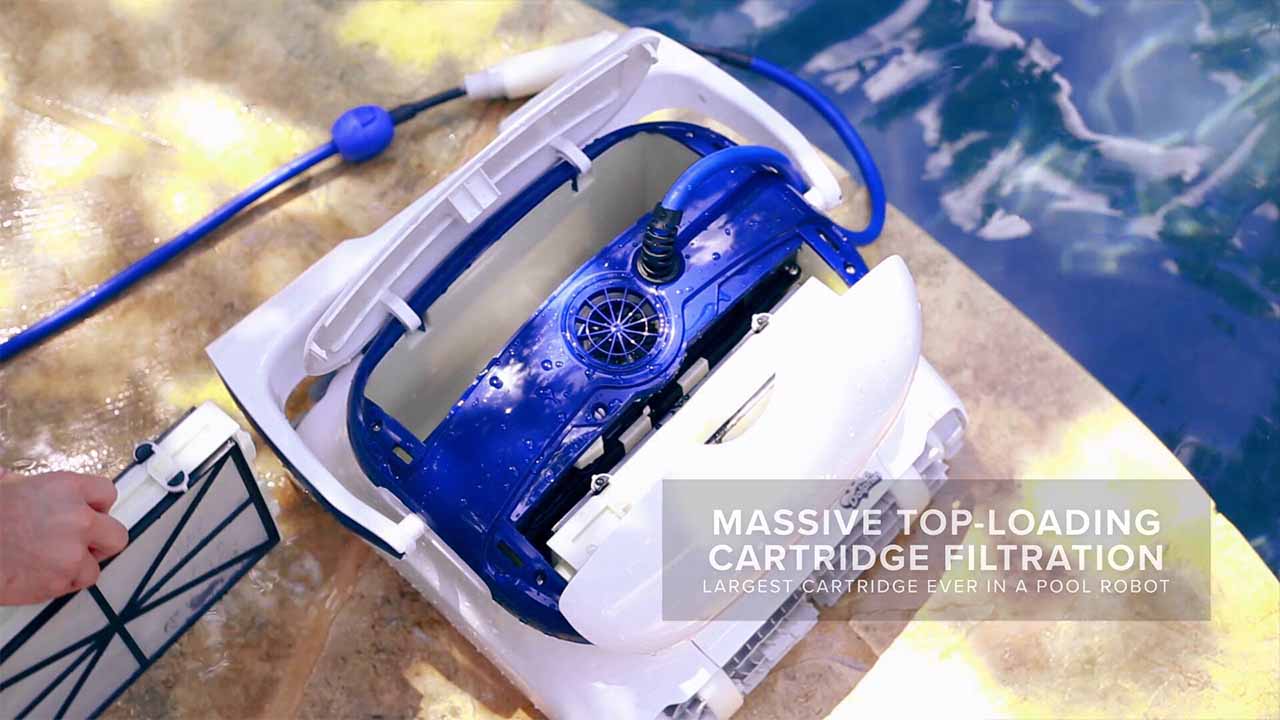
It leads for a second reason. Its timer runs every day as its single setting, so the robot is made to stay in the pool between scheduled cycles. You bring it out when the top-hatch MaxBin basket needs emptying, not after every clean. Fewer retrievals is its own answer to the parking question.

$959 $659 SALE Save $300
Temporarily out of stock
Lightest lift, lowest price
At 14.2 lb the Escape is the lightest of the five Dolphins compared here, and its 1.5-hour cycle is the shortest, so the wait before retrieval is short too. It suits above-ground pools as well as in-ground ones up to 33 ft, and lifting a robot over the top rail of an above-ground pool is exactly where weight counts.
It is second for two reasons. Its cable is 40 ft with no swivel, so on rounds larger than about 24 ft, measure the cable run from where the power supply will sit; the Cayman's 50 ft cable is the safer choice when that run is long. And it has no timer as standard, so every cycle ends with a retrieval.

$2999 $2349 SALE Save $650
Temporarily out of stock
For pools over 33 ft, with a caddy
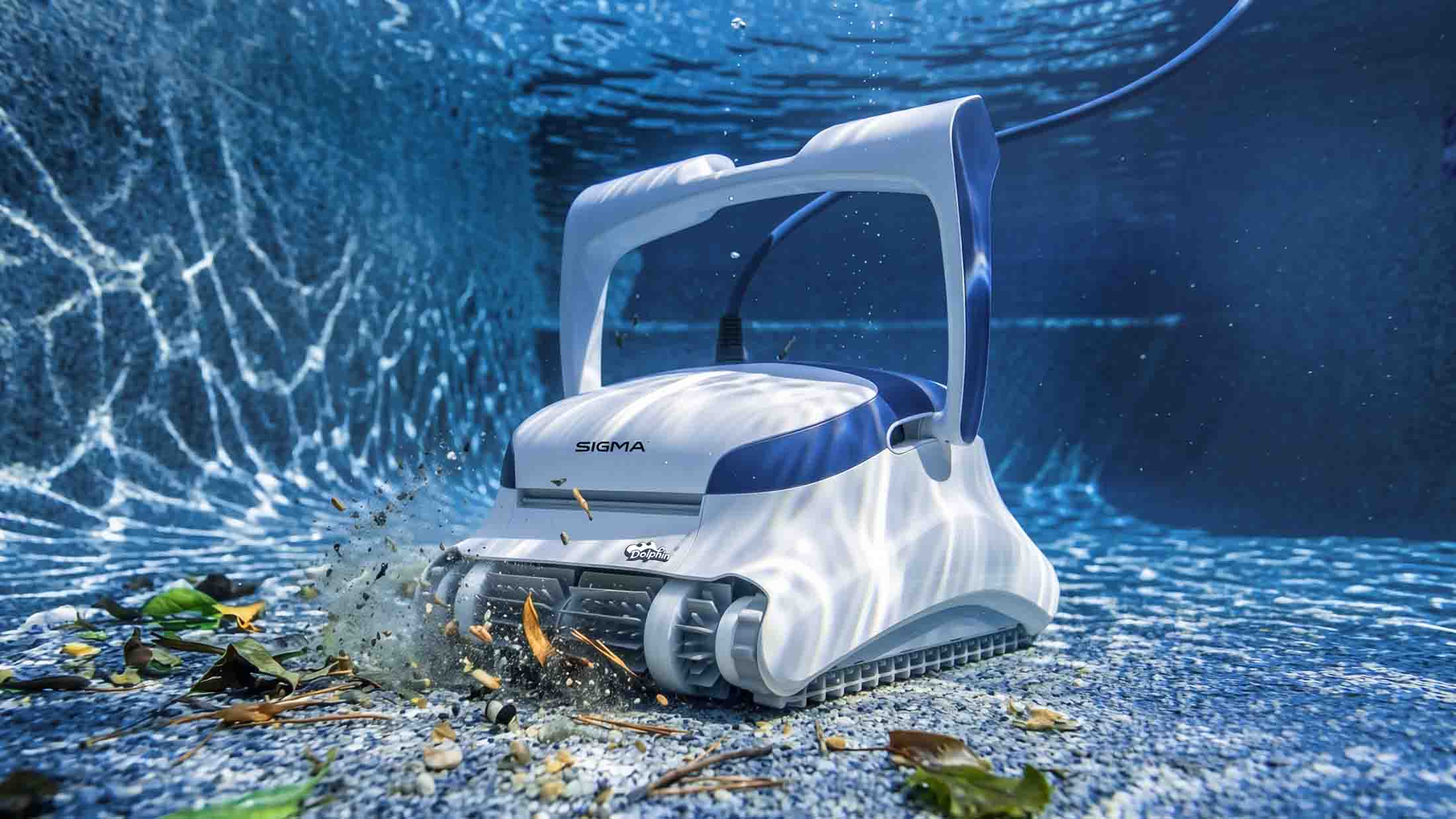
The Sigma is on this page for the pools the two light robots are not rated for. It cleans in-ground pools up to 50 ft, floor, walls and waterline, and it is the most capable robot in the guide. It is also the heaviest at 24.6 lb, and it does not list a parking mode.
What it offers a retrieval-minded owner is predictability and a well-behaved cable. Its app scheduler sets cycles by day and time, so you know when the 2.5-hour run ends, and the 360-degree anti-tangle swivel on its 55 ft cable means the line you pull on is not wound around itself.
The criteria
Parking exists to make the lift easy, and weight decides the same thing. The five Dolphins compared here run from 14.2 lb to 24.6 lb dry, and every one is heavier for the first seconds out of the water.
The cable is for guiding the robot to the surface, not for hoisting it out. Pull gently until the robot rises, take the handle, pause while the water runs out, then lift.
You retrieve the robot by its cable, so it has to reach comfortably and lie untwisted. The Cayman's is 50 ft and the Escape's 40 ft, both without a swivel. The Sigma's 55 ft cable has a 360-degree anti-tangle swivel.
A parked robot announces the end of its cycle by being visible. Without parking, you go by the clock: 1.5 hours for the Escape, 2 hours for the Cayman, 2.5 hours for the Sigma.
On paper
| Specification | Dolphin Cayman | Dolphin Escape | Dolphin Sigma |
|---|---|---|---|
| Price today | $1049 | $659 | $2349 |
| Cleans | Floor and walls | Floor and walls | Floor, walls and waterline |
| Scheduling | Timer: every day | Optional Automation Timer: every 24, 48 or 72 hours | Weekly scheduler by day and time |
| App | No app; controls on the power supply | No app | myDolphin Plus (Wi-Fi and Bluetooth) |
| Filtration | MaxBin basket with fine panels; NanoFilter panels optional | MaxBin basket; NanoFilter panels optional | NanoFilters and standard filter cartridges |
| Brushes | HyperBrush | HyperBrush | Quad scrubbing brushes |
| Navigation | SmartNav 2.0 | SmartNav 2.0 | SmartNav 3.0 with gyroscope |
| Cable | 50 ft | 40 ft | 55 ft with 360° anti-tangle swivel |
| Warranty | 2 years | 2 years | 3 years |
Self-parking saves one motion: bringing the robot from the floor to the surface. You can do that in a few seconds, and doing it correctly protects the cable.
Never lift the robot out of the water by the cable. It is the robot's power line: a leash for guiding, not a rope for hoisting.
Waterline parking is common on cordless robots for a practical reason: with no cable there is nothing to pull, so the robot has to come to you. A corded robot already has a line to the surface, which is why the feature is rare on corded machines.
The trade runs the other way too. Every robot in this guide is corded, which means no charging between cycles. On the Cayman and the Sigma it also means scheduled cleaning, with the robot staying in the pool between runs and coming out weekly for a filter rinse. A robot that must come out after each run to charge is lifted far more often. Count the lifts per month, not just the effort per lift.
A caddy does not retrieve the robot, but it removes everything that follows the lift: the carry to storage, the power supply on the ground, the cable in a heap. None of these robots includes one. It is a separate accessory, shown on our caddy page.
For the two 14 lb robots it is optional. For the Sigma it is close to essential if the robot is stored any distance from the pool. Park it beside the spot where you bring the robot up, so the wet lift ends on the caddy. Every robot here also comes with a 30-day in-pool trial with free exchanges and no restocking fees, so you can judge the lift for yourself.
Owners ask
None of the five compared in this guide lists automatic waterline parking or any pickup mode: not the Cayman, Escape, Sigma, Premier or Quantum. Each stops where its cycle ends. You bring it to the surface with a gentle pull on the cable, then lift it out by the handle.
Pulling gently to float the robot up to the surface is the normal method. Lifting it out of the water by the cable is not, because that hangs the robot's full wet weight on its power line. Guide with the cable, lift with the handle.
Heavier than its listed weight, because the body is full of water and the filter holds wet debris. We will not put a number on it, since it changes with the load. Holding the robot at the surface for several seconds lets most of that water run out.
Easier to lift out, yes. But it has to come out after every run to be charged, while a corded robot on a schedule can stay in the pool between cycles and come out about once a week. Compare how many lifts each routine asks for across a month.
By the clock, yes. Cycle lengths are fixed: 1.5 hours on the Escape, 2 hours on the Cayman, 2.5 hours on the Sigma. Note the start time and you know the finish. On the Sigma the scheduler sets each start by day and time, so retrieval can become a habit.
The verdict
If automatic waterline parking is a requirement, none of these robots meets it, and we would rather tell you than sell you one. If what you want is a robot that is easy to get out of the pool, choose by weight and pool size: the Cayman for pools up to 33 ft, the Escape where the lowest weight and price lead, and the Sigma for larger pools, with a caddy waiting at the edge.
Keep reading