Dolphin Sigma
$2999 $2349 SALE Save $650
Temporarily out of stock


By feature
Top pick: Dolphin Sigma
$2349 today · Free shipping
Suction only collects what is already loose, so brush count decides what a robot can lift off plaster, pebble and tile, and three of the five Dolphins in these guides qualify.
The short answer
The Dolphin Sigma goes past dual with quad scrubbing brushes, the most brush contact per pass of the robots in this guide, backed by three motors. The Premier is the true dual-brush pick, with the same 4,500 GPH for less. Choose the Quantum if you want dual HyperBrush rollers that spin at twice standard speed, plus shelf and stair coverage.
Run a hand along a pool wall that looks clean and it often feels slick. That film is the start of algae and biofilm, bonded to the surface tightly enough that water moving past will not shift it. A robot's pump can only collect what has already come loose. The brushes do the loosening, which is why the best robotic pool cleaner with dual brushes beats a single-brush machine of similar flow on any pool that grows a film.
Two brushes also change the geometry. With one at each end, the robot scrubs on the forward pass and again on the return, and it holds more brush against the wall on the way up. Three of the five Dolphins compared here carry two brushes or more. The Cayman and Escape carry one, and we explain below what that costs.
The ranking
$2999 $2349 SALE Save $650
Temporarily out of stock
Four brushes where others have two
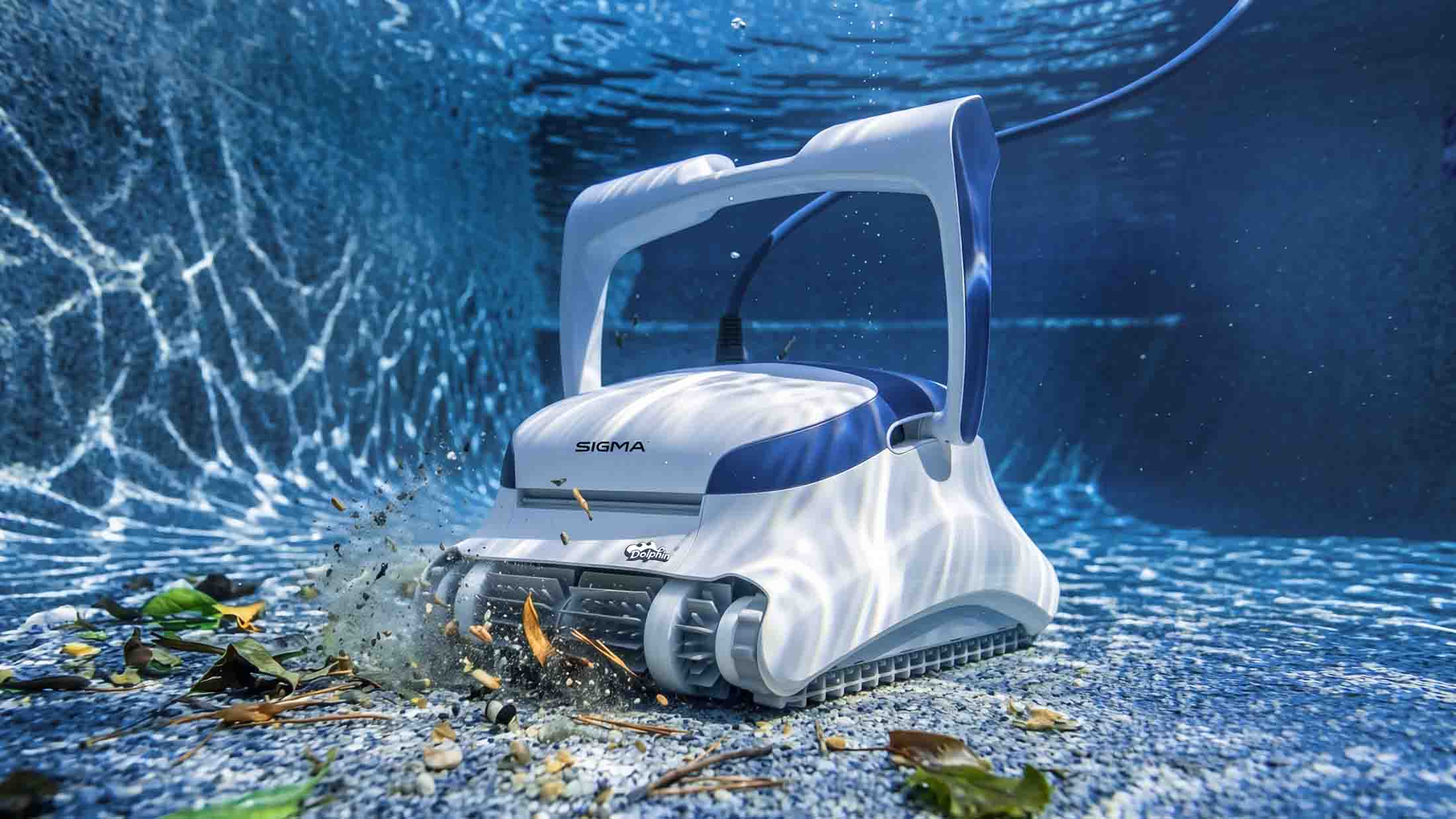
Dual is the entry requirement for this page, and the Sigma doubles it. Quad scrubbing brushes put more brush on the surface per pass than any other robot in this guide, so each strip of floor or wall is worked several times in one crossing. Three commercial-grade ProLine motors move 4,500 GPH behind them, which matters because loosened film is only gone once it reaches the filter, and the included NanoFilters are described as filtering down to 2 microns. SmartNav 3.0 with an onboard gyroscope spaces the passes evenly, so the extra scrubbing reaches the whole pool, up to 50 ft.

$2499 $1949 SALE Save $550
Temporarily out of stock
The straightforward dual-brush workhorse
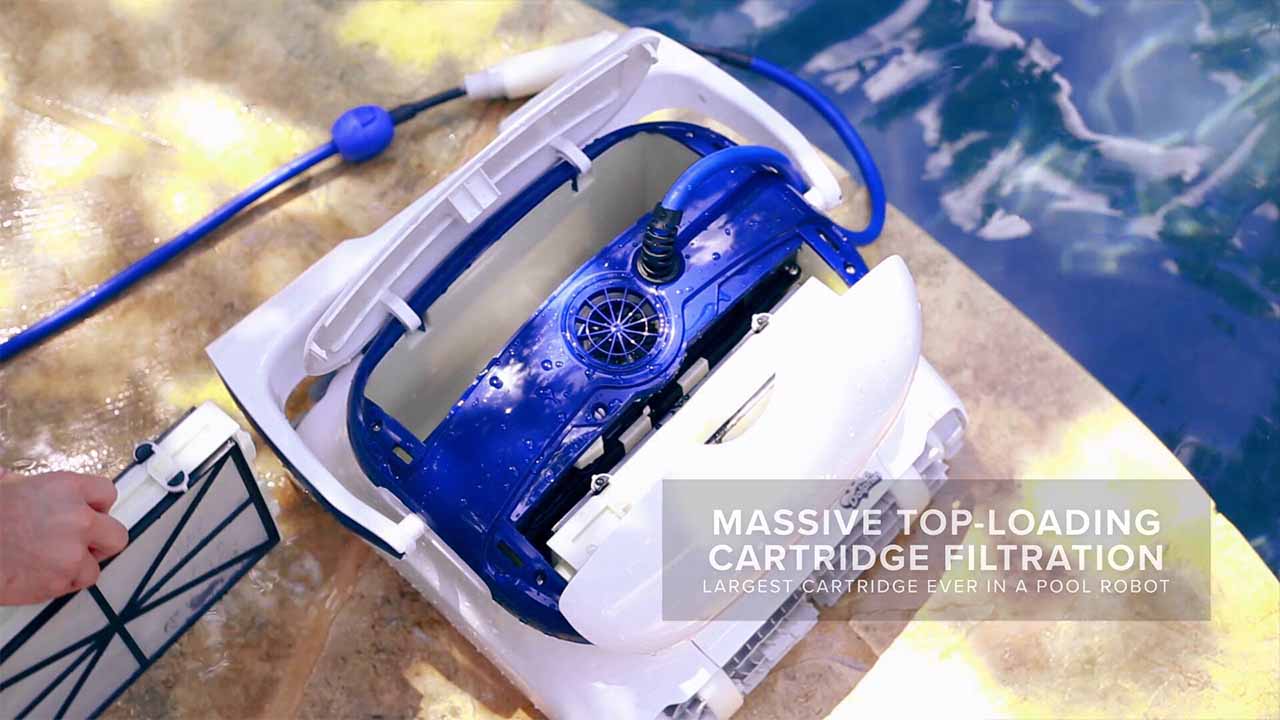
The Premier is the robot this search usually has in mind: dual scrubbing brushes on a machine built to climb. Dual commercial-grade ProLine motors deliver the same 4,500 GPH as the Sigma, and its 3-hour cycle is the longest here, which gives those two brushes more time on the surface. Multi-Media filtration lets you fit NanoFilters once brushing has put fine film into suspension, or the oversized leaf bag when the job is debris. Controls and a weekly timer sit on the power supply, so nothing depends on a phone. The warranty runs 3 years.

$1799 $1599 SALE Save $200
Temporarily out of stock
Dual HyperBrush at twice the speed
The Quantum takes the other route to more scrubbing. Its two brushes are HyperBrush rollers, spinning at twice the speed of standard brushes, so each makes more contacts with the surface for every foot the robot travels. That suits algae film on pebble and the oily line at the water's edge. It is also the one robot here with sun shelves, Baja ledges and stairs in its published coverage, places where film builds because nothing reaches them. Flow is 4,000 GPH into an XXL MaxBin basket, with NanoFilter panels included. It ranks third on flow and warranty length, not on brushing.
The criteria
A robot reverses constantly. With a brush at one end only, half its travel is led by the end that has none. Brushes at both ends mean every pass, forward or return, is a scrubbing pass, and no strip is vacuumed without being worked first.
On a wall the robot hangs from its tracks and presses its brushes into the surface. More brush in contact means more of the wall is worked on each climb, and a steadier hold at the waterline, where oils and scale collect.
There are two ways to add scrubbing: more brushes, or faster ones. The Sigma has four scrubbing brushes. The Quantum has two HyperBrush rollers spinning at twice the speed of standard brushes. Both raise the work done per foot travelled, and they suit slightly different pools.
Pebble and aged plaster hide film in their texture and reward hard brushing. Smooth vinyl and fiberglass release film easily but show every missed patch. All three picks list plaster, gunite, pebble, tile, vinyl liner and fiberglass among their published surfaces.
On paper
| Specification | Dolphin Sigma | Dolphin Premier | Dolphin Quantum |
|---|---|---|---|
| Price today | $2349 | $1949 | $1599 |
| Cleans | Floor, walls and waterline | Floor, walls and waterline | Floor, walls, waterline, sun shelves and stairs |
| Scheduling | Weekly scheduler by day and time | Weekly timer: every day, every 2 days or every 3 days | Weekly timer: every day, every 2 days or every 3 days |
| App | myDolphin Plus (Wi-Fi and Bluetooth) | No app; controls on the power supply | myDolphin Plus (Wi-Fi) |
| Filtration | NanoFilters and standard filter cartridges | Multi-Media: NanoFilters, oversized leaf bag and standard fine filters | XXL MaxBin basket with standard and NanoFilter panels |
| Brushes | Quad scrubbing brushes | Dual scrubbing brushes | Dual HyperBrush |
| Navigation | SmartNav 3.0 with gyroscope | SmartNav 2.0 | SmartNav 2.0 |
| Cable | 55 ft with 360° anti-tangle swivel | 55 ft with 360° anti-tangle swivel | 55 ft with anti-tangle swivel |
| Warranty | 3 years | 3 years | 2 years |
The Cayman and Escape each carry a single HyperBrush. It is a good brush: it spins at twice the speed of standard Dolphin brushes, and for routine floor and wall cleaning in a pool up to 33 ft it does the work. They are not on this page for two reasons. The question asked for two brushes and they have one. And they clean floor and walls only, so the band at the water's surface, where brushing matters most, is left to you.
For an above-ground pool, neither point changes the answer. The three picks here are in-ground robots, and a single-HyperBrush Cayman or Escape is the right machine for that pool.
A second brush keeps a clean surface clean with more margin. It does not rescue a neglected one. Established algae, black algae rooted in plaster and calcium scale need chemistry and a stiff hand brush; during an algae treatment you still brush the pool yourself and run the pool's own filter. The robot's work comes before, removing the film algae starts from, and after, collecting what has died and settled.
Nor does doubling the brushes extend their reach. Most robots do not clean top steps or very shallow ledges, and tight inside corners get less contact than open wall. Plan on a few minutes with a hand brush each week for those spots, whichever robot you buy.
Brushes are consumable parts. As they wear, they stop pressing on the surface, and wall climbing usually weakens before floor cleaning visibly suffers. More brushes also means more parts to replace over the robot's life, a fair cost to weigh against the Sigma's four. Look for these signs when you rinse the filter:
Owners ask
On pools that grow film, yes. Two brushes scrub on both the forward and return pass and hold more brush against the wall. On a small, smooth pool with light debris, a single fast brush such as the HyperBrush on the Cayman does the routine work. The gap shows on rough finishes and in warm water.
Not literally. Four brushes put more contact on each strip of surface per pass, which helps most on textured finishes and stubborn film. Results still depend on cycle time, flow and how often the robot runs. Think of the Sigma's quad brushes as margin: the pool gets more scrubbing than it strictly needs, so fewer patches are missed.
The three picks all list vinyl liner and fiberglass among their published surfaces, so the brushes are made for them. What damages a liner is grit trapped under a brush or track, not the brush itself. Rinse the brushes when you clean the filter, and check the manual if your liner is old, wrinkled or brittle.
No. It removes the film algae grows from and collects dead algae after treatment, but a live bloom needs sanitizer, hand brushing and the pool's own filtration. Take the robot out before you shock, then run it with fine filters once the algae has died and settled.
It depends on surface and use: rough pebble wears brushes faster than vinyl, and daily cycles wear them faster than weekly ones. We do not quote a figure because no honest one fits every pool. Inspect them each time you rinse the filter and replace them when the fins round off.
The verdict
If the pool has a rough finish, recurring film or an owner who notices every missed patch, the Sigma's four brushes and three motors are worth the top price. If you simply want two good brushes and strong flow, buy the Premier and keep the difference. Take the Quantum when shelves, ledges or stairs are part of the pool, or when fast brushes at a lower price matter more than a longer warranty. If the pool is under 33 ft and lightly soiled, one brush is enough.
Keep reading