Dolphin Sigma
$2999 $2349 SALE Save $650
Temporarily out of stock


By debris and dirt problem
Top pick: Dolphin Sigma
$2349 today · Free shipping
Mustard algae is cured with chemistry, not machinery. A robot's part is daily wall scrubbing afterward, and it must be washed itself, or it puts the algae back.
The short answer
No robot cures mustard algae; treatment is chemical. For the scrubbing that keeps it from re-anchoring, the Dolphin Sigma is our top pick: four scrubbing brushes on the walls and waterline, scheduled by day in its app, with NanoFilters included. The Dolphin Premier follows with two brushes and a daily timer. Take any robot out while you shock, and wash it before it goes back in.
Mustard algae is the yellow-brown dust that settles on the shaded side of the pool, wipes off with one pass of a brush, and is back in the same place by the end of the week. It tolerates normal chlorine levels better than green algae, and it survives outside the water on brushes, toys, swimsuits and cleaning equipment. Both facts shape what a robot can and cannot do.
The cure is chemical: brush, shock hard, hold chlorine up, and often add an algaecide made for it. The best robotic pool cleaner for mustard algae is the one that then scrubs the walls every day, so nothing gets the quiet week it needs to take hold again, and filters what the brushes lift. The Dolphin Quantum and Dolphin Cayman complete the ranking. One warning runs through the whole page: the robot itself has to be washed as part of the treatment.
The ranking
$2999 $2349 SALE Save $650
Temporarily out of stock
Four brushes on the walls, every day
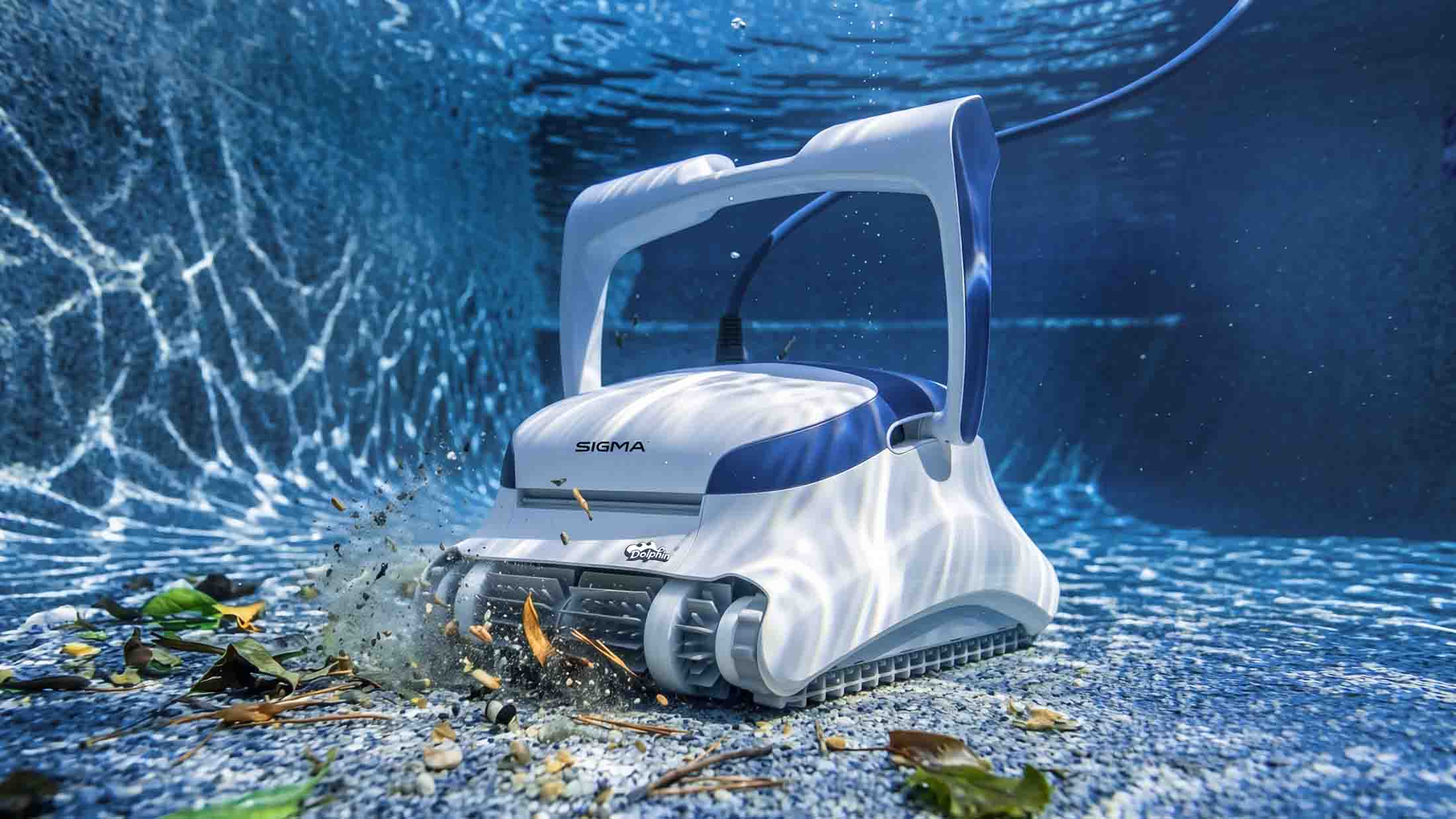
After treatment, the task is to deny mustard algae an undisturbed wall. The Sigma puts four scrubbing brushes on the floor, walls and waterline, more than any other robot in this guide, and its app scheduler runs that scrub on the days and at the times you choose, daily if you want. SmartNav 3.0 uses a gyroscope to keep wall coverage systematic across the whole pool, shaded side included.
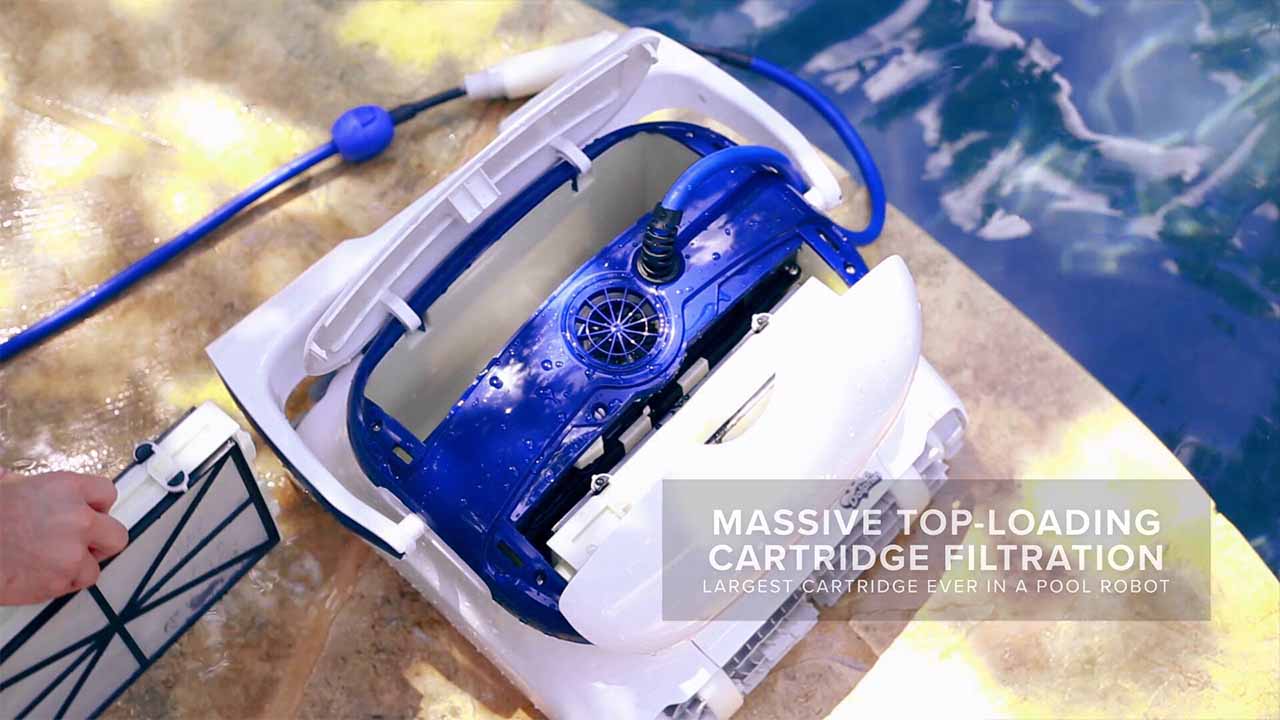
Included NanoFilters hold the dust the brushes lift, with three ProLine motors supplying 4,500 gallons per hour. The cartridges come out for the washing this algae makes necessary, and the app alerts you when they are loaded.

$2499 $1949 SALE Save $550
Temporarily out of stock
Daily timer scrub with NanoFilters
The Premier keeps the walls brushed on a routine you set once. Its weekly timer, on the power supply, runs every day, every 2 days or every 3 days; for a pool with a mustard history, choose every day through the warm months. Dual scrubbing brushes work the floor, walls and waterline over a 3-hour cycle on 4,500 gallons per hour from dual ProLine motors.
NanoFilters are included. The top-load filter lifts out in seconds with no tools, and a filter that easy to remove is one that actually gets washed after every cycle of a treatment week.

$1799 $1599 SALE Save $200
Temporarily out of stock
The pick that scrubs steps and shelves
Mustard algae likes steps, benches and shallow shelves, and the Quantum is the one robot here that cleans stairs, sun shelves and Baja ledges along with the floor, walls and waterline. Two HyperBrushes spin at twice the speed of standard brushes. The weekly timer runs every day if you set it so, or schedule through the app over Wi-Fi.
Its NanoFilter panels are included, and the whole XXL MaxBin basket lifts out from the top with one click, so washing the filter after a treatment-week cycle is quick. The 2-hour cycle is short enough to run daily without tying up the pool.

$1299 $1049 SALE Save $250
Temporarily out of stock
Daily floor and wall scrub, pools to 33 ft
For a smaller pool, the Cayman supplies the one habit that matters most after treatment: a scrub every day. Its timer has that single setting. A HyperBrush at twice the speed of standard Dolphin brushes works the floor and walls for 2 hours, with over 4,000 gallons per hour behind it. The MaxBin basket opens through a top hatch with one tab for washing.
Know its two gaps. It does not reach the waterline, so the strip where mustard algae often sits needs a hand brush. And holding the fine dust takes the optional NanoFilter panels.
The criteria
Mustard algae re-anchors on walls that go unbrushed. The more brush a robot puts on the wall, and the more often, the less time it gets. Brush count and a daily schedule are the two specs to compare.
It favors the shaded wall and the strip just below the tile line. Robots that clean floor, walls and waterline cover that band: the Sigma, Premier and Quantum. The Cayman stops below it.
Steps, benches and shelves are classic mustard spots, and most robots give them little attention. Only the Quantum, of the picks here, cleans stairs, sun shelves and Baja ledges. With the others, brush those by hand.
What the brushes knock off is a fine dust. Standard panels return part of it to the water, where it can settle elsewhere. NanoFilters and NanoFilter panels hold more of it, then need a thorough wash.
On paper
| Specification | Dolphin Sigma | Dolphin Premier | Dolphin Quantum | Dolphin Cayman |
|---|---|---|---|---|
| Price today | $2349 | $1949 | $1599 | $1049 |
| Filtration | NanoFilters and standard filter cartridges | Multi-Media: NanoFilters, oversized leaf bag and standard fine filters | XXL MaxBin basket with standard and NanoFilter panels | MaxBin basket with fine panels; NanoFilter panels optional |
| Filter access | Cartridges | Top-load, no tools | Top-load, one-click open | Top hatch, one-tab emptying |
| Brushes | Quad scrubbing brushes | Dual scrubbing brushes | Dual HyperBrush | HyperBrush |
| Flow rate | 4,500 GPH | 4,500 GPH | 4,000 GPH | Over 4,000 GPH |
| Cycle time | 2.5 hours | 3 hours | 2 hours | 2 hours |
| Cleans | Floor, walls and waterline | Floor, walls and waterline | Floor, walls, waterline, sun shelves and stairs | Floor and walls |
| Scheduling | Weekly scheduler by day and time | Weekly timer: every day, every 2 days or every 3 days | Weekly timer: every day, every 2 days or every 3 days | Timer: every day |
| Warranty | 3 years | 3 years | 2 years | 2 years |
Mustard algae survives on equipment. A robot that cleaned the pool before or during an outbreak can hold it in the filter media, the brushes, the tracks and the body, and return it to freshly treated water on the next cycle. Then the yellow dust reappears and the treatment gets the blame.
Make the robot part of the treatment. Take it out before you shock; do not leave it sitting in shock-level chlorine, and follow the manual on chemical exposure. While it is out, remove the filters and wash them until the water runs clear. Hose the brushes, tracks, underside and filter housing. Rinse everything well and let it dry in the shade. Do the same for the hand brush, the pole and the leaf net. Put the robot back only when chlorine has returned to its normal range.
Mustard algae returns for a short list of reasons, and the robot is only one of them.
Owners ask
Yes. It can survive in damp filter media and on brushes, tracks and the body, then go back into the water on the next cycle. That is why the robot has to be washed thoroughly and rinsed during treatment, along with poles, brushes, nets and toys. A robot returned unwashed is a common reason an outbreak seems to shrug off the shock.
No. Take it out first. A robot should not sit in shock-level chlorine, and this treatment holds chlorine high for longer than a routine shock. Wash the robot while it is out, and return it once your test kit shows chlorine back in the normal range. Check the manual for the manufacturer's limits.
It will not shorten the outbreak; chemistry does that. It earns its keep afterward, when daily wall scrubbing and fine filtration make a return less likely and save you the hand brushing. If mustard algae is a yearly visitor, that routine is the argument for a robot with a schedule and waterline cleaning.
Because those spots suit it: shade, little water movement and a surface nobody brushes. Mustard algae resettles where it is left alone. Improve circulation there, brush it by hand, keep sanitizer steady, and have a robot scrub the walls daily. If a deposit never returns to the same place, it was more likely pollen or dust.
The verdict
Chemicals end a mustard algae outbreak. A robot helps keep it ended. For that, rank by brush on the wall and by schedule: the Sigma, with four brushes and day-by-day scheduling; the Premier, with a daily timer; the Quantum, for steps and shelves; the Cayman, for smaller pools. Whichever you own, wash it during treatment and keep it out of the shock. Skip that, and the best robot here becomes the way the algae gets back in.
Keep reading