Dolphin Sigma
$2999 $2349 SALE Save $650
Temporarily out of stock


By pool surface
Top pick: Dolphin Sigma
$2349 today · Free shipping
Aggregate is a family of finishes, from foot-scuffing exposed stone to polished surfaces as smooth as plaster. The right robot is the one matched to your texture.
The short answer
For rough exposed aggregate, the Dolphin Sigma is our pick: quad scrubbing brushes work into the texture and NanoFilters hold the dust that comes out. On polished or quartz finishes, the Premier or the Quantum cleans as well for less. Pools of 33 ft and under can use the Cayman.
There is no single best robotic pool cleaner for aggregate pools, because aggregate is not a single surface. Exposed aggregate leaves the tops of small stones standing proud of the cement. Polished aggregate is ground flat and feels close to plaster. Quartz and glass-bead blends sit between the two. A robot that is overkill on one is correctly sized for another.
Texture does two things. It gives tracks plenty of grip, so wall climbing is rarely the question it is on tile. And it hides dirt: fine dust settles into the low spots between stones, where water flow alone does not reach it. The four robots ranked here all list pebble among their published surfaces, and aggregate behaves the same way.
The ranking
$2999 $2349 SALE Save $650
Temporarily out of stock
Best for rough exposed aggregate
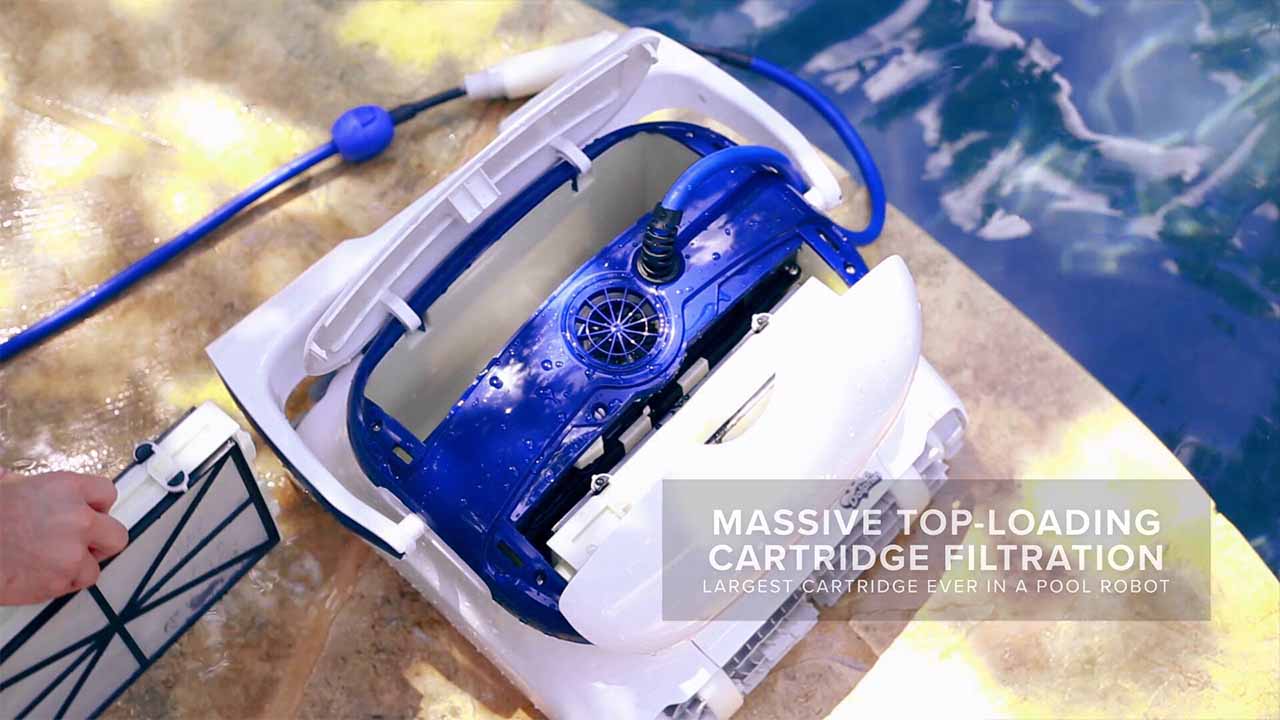
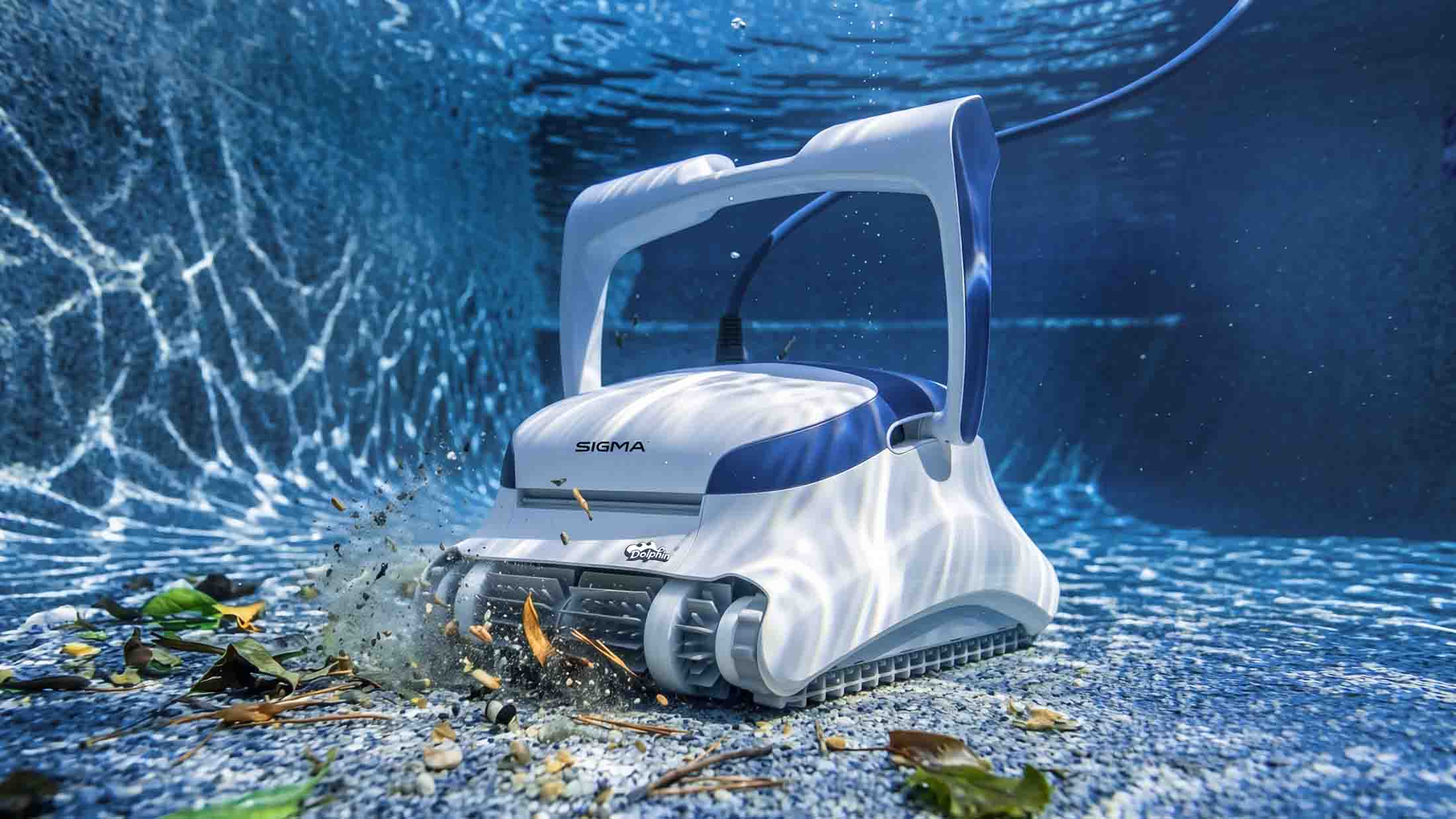
Exposed aggregate is the finish where brush count matters most, and the Sigma is the only robot in this guide with quad scrubbing brushes. More brush edges reach into the gaps between stones on each pass, and three commercial-grade ProLine motors pull 4,500 gallons per hour through the included NanoFilters, which keep the dust in the robot. SmartNav 3.0 with its gyroscope keeps the passes methodical, and the app schedules cycles by day and time. The warranty runs 3 years; brushes are wear parts on any robot, so budget for them separately.

$2499 $1949 SALE Save $550
Temporarily out of stock
Longest cycle for textured floors
The Premier brings the same 4,500 gallons per hour as the Sigma from dual commercial-grade ProLine motors, with dual scrubbing brushes and a 3-hour cycle, the longest of the picks. On aggregate that time is useful, because a textured floor gives up its dust gradually. The Multi-Media system fits the finish: NanoFilters for the fine dust, the oversized leaf bag when the trees drop, standard fine filters for the rest. Swaps take seconds through the top, no tools. The power-supply timer runs every day, every 2 days or every 3 days, and the warranty is 3 years.

$1799 $1599 SALE Save $200
Temporarily out of stock
Fast brushes, lowest-priced 50 ft pick
The Quantum answers texture with speed. Its dual HyperBrush spins at twice the rate of standard brushes, so each foot of floor gets more brush strokes even with two brushes. That suits polished aggregate, quartz and glass-bead finishes, and it copes with exposed aggregate at a lower price than the two robots above. Dust goes into NanoFilter panels, supplied as a full set, inside an XXL MaxBin of over 400 square inches that opens at the top with a single click. A sun shelf, Baja ledge or stairs in the same finish are within its published coverage.

$1299 $1049 SALE Save $250
Temporarily out of stock
Aggregate pools 33 ft and under
For a smaller aggregate pool the Cayman is the sensible floor-and-walls robot. It lists pebble among its published surfaces, runs one HyperBrush at twice the speed of standard Dolphin brushes, and moves over 4,000 gallons per hour. The MaxBin basket is 50% larger than standard Dolphin filters and ships with fine panels; for the dust an exposed finish holds, add the optional NanoFilter panels. Its timer runs every day, which suits texture: frequent cycles stop dust from packing into the low spots.
The criteria
On exposed aggregate the dirt sits below the stone tops, and brushes have to flex into those gaps on every pass. Four brushes do more of that per trip than two; a brush spinning at twice standard speed makes up some of the difference. On polished aggregate, ordinary brushing is enough.
What comes out of a textured floor is mostly fine: dust, silt, dead algae. Standard filters return part of it to the water, and it settles back into the same low spots. The Sigma, Premier and Quantum all include ultra-fine media; on the Cayman the NanoFilter panels are an optional add-on.
Rough finishes reward repeated coverage. Cycles here run 2 hours on the Quantum and Cayman, 2.5 on the Sigma and 3 on the Premier. A shorter cycle run more often does similar work, which is where a timer or app schedule earns its place.
Exposed aggregate is abrasive. It wears brushes and tracks faster than plaster or vinyl does, on any robot from any maker. Plan to inspect brushes each season and replace them when they look worn down. This is a running cost of the finish, not a fault.
On paper
| Specification | Dolphin Sigma | Dolphin Premier | Dolphin Quantum | Dolphin Cayman |
|---|---|---|---|---|
| Price today | $2349 | $1949 | $1599 | $1049 |
| Brushes | Quad scrubbing brushes | Dual scrubbing brushes | Dual HyperBrush | HyperBrush |
| Cleans | Floor, walls and waterline | Floor, walls and waterline | Floor, walls, waterline, sun shelves and stairs | Floor and walls |
| Traction | HyperGrip tracks | HyperGrip tracks | HyperGrip tracks | HyperGrip tracks |
| Pool length | Up to 50 ft | Up to 50 ft | Up to 50 ft | Up to 33 ft |
| Filtration | NanoFilters and standard filter cartridges | Multi-Media: NanoFilters, oversized leaf bag and standard fine filters | XXL MaxBin basket with standard and NanoFilter panels | MaxBin basket with fine panels; NanoFilter panels optional |
| Robot weight | 24.6 lb | 20.3 lb | 18.3 lb | 14.6 lb |
| Warranty | 3 years | 3 years | 2 years | 2 years |
Builders use the word aggregate for several finishes, and the invoice does not always say which. Your hand is the better guide: kneel at the top step and run a palm across the floor. Individual stones mean an exposed finish. A feel like fine sandpaper means a small-pebble or quartz blend. A feel like a countertop means polished. Age matters too. Cement-based finishes roughen as they wear, so an older quartz pool can clean more like exposed aggregate than it did when new. The table sorts the common types by what each asks of a robot.
| Finish | Feel | What it asks of a robot |
|---|---|---|
| Exposed aggregate | Rough; stone tops stand proud | Most brush contact, fine filtration, regular brush checks |
| Small-pebble blends | Fine-grained texture | Good brushing and fine filtration |
| Quartz blends | Lightly textured | Standard brushing; fine filters for dust |
| Glass-bead blends | Smooth with slight texture | Standard brushing; fine filters on dark colors |
| Polished aggregate | Smooth, close to plaster | Any pick; choose on pool length and features |
Leaves on aggregate behave as they do anywhere. Dust does not. It drops into the texture, stays put while the pump runs, and lifts into a cloud when someone swims. Owners often read that cloud as a water-chemistry problem when it is a floor-cleaning one. The fix has two parts: brushes lift the dust, ultra-fine filtration keeps it. Run NanoFilters or NanoFilter panels for routine cycles and rinse them after each one, because fine media loads quickly on a textured floor. Switch to standard filters when leaves arrive, so the fine media is not blinded by them.
Exposed aggregate works like coarse sandpaper on anything that rubs against it for hours a week. Robot brushes and tracks are replaceable wear parts for this reason. We do not quote a brush life for aggregate, because it varies with the finish, the pool size and how often the robot runs. The routine is simple: look at the brushes when you rinse the filter, compare them a few times a season with how they looked new, and replace them when wall cleaning starts to fall off. Worn brushes are also the first thing to check when a robot that used to climb stops reaching the top of the wall.
Owners ask
No. Pebble is on the published surface list for the Sigma, Premier, Quantum and Cayman, and exposed aggregate behaves the same way. The roughness helps traction. Its cost is wear: brushes and tracks are used up faster than on smooth finishes, so treat them as routine replacement parts.
There is no honest single number. Wear depends on how exposed the stone is, how long the cycles are and how many run each week. Expect shorter brush life than on plaster or vinyl, inspect the brushes through the season, and replace them when wall cleaning weakens.
It needs less. Polished aggregate is ground smooth and cleans much like plaster, so two brushes are plenty and the choice turns on pool length, filtration and features. For most polished pools the Premier or Quantum is the right size of robot.
Usually because the filter let it through. Fine dust passes standard panels, stays suspended for hours and settles overnight into the texture again. Fit NanoFilters or NanoFilter panels, rinse them after each cycle, and run again the next day.
Yes. Pebble Tec is a brand of pebble finishes, which sit inside the aggregate family, so the same reasoning applies: match brushes to roughness and use fine filtration. This ranking covers the wider range, including quartz and glass-bead blends that are smoother than classic pebble.
The verdict
Rough, exposed aggregate in a pool up to 50 ft: the Sigma, for brush count. Mid-texture or polished finishes: the Premier for the long cycle and Multi-Media filtration, or the Quantum for fast brushes, shelf cleaning and the smallest outlay of the three 50 ft robots. Any aggregate pool of 33 ft or less on a tight budget: the Cayman with the optional NanoFilter panels. Then check the brushes each season.
Keep reading