Dolphin Sigma
$2999 $2349 SALE Save $650
Temporarily out of stock


By pool surface
Top pick: Dolphin Sigma
$2349 today · Free shipping
Tile is slick, its grout holds dirt, and the waterline band shows every film. Here is which robot handles all three, and where a cheaper one is enough.
The short answer
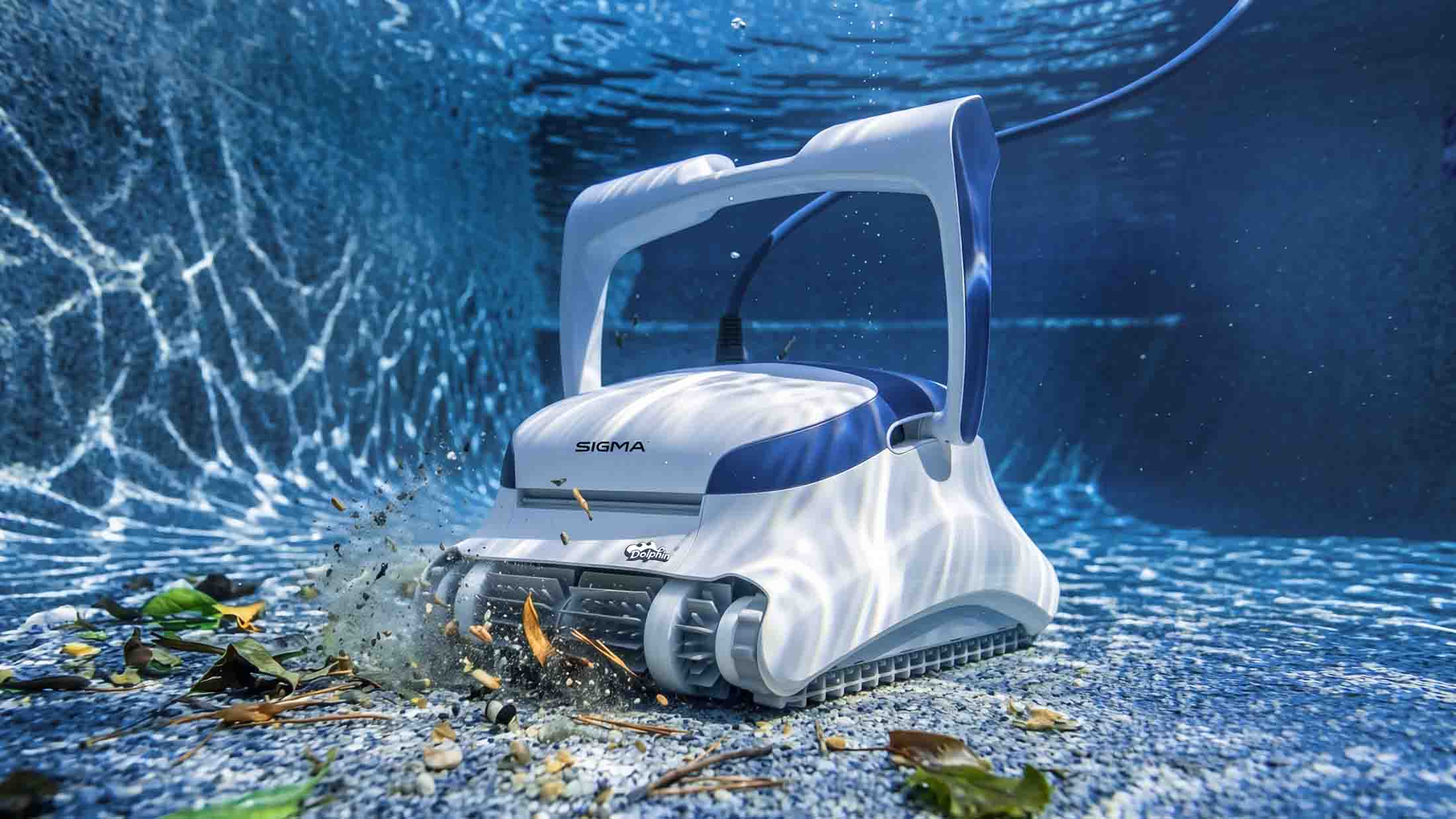
The Dolphin Sigma is our first pick for tile: quad scrubbing brushes put the most bristle on grout lines, and it scrubs the waterline band every cycle. Choose the Premier for the same waterline work from a simple timer, or the Quantum if tiled steps need cleaning too. In a pool of 33 ft or less, the Cayman covers floor and walls.
Choosing the best robotic pool cleaner for tile pools starts with where tile collects dirt. The glazed face sheds debris easily. The grout between tiles does not: it sits a fraction lower, it is porous, and it gives dust and algae a place to settle. The band at the waterline is the other trouble spot, because sunscreen, body oil and minerals dry onto it as the water level moves.
So tile asks three things of a robot: brushes that reach into grout joints, tracks that hold a slick wall, and a climb that ends with a scrub at the waterline. Three of the five Dolphins compared here do all three. Two stop below the waterline, which for most tile owners is the part they wanted cleaned.
The ranking
$2999 $2349 SALE Save $650
Temporarily out of stock
Most brush contact on grout
Tile rewards brushing, and the Sigma has the most of it: quad scrubbing brushes where the other 50 ft robots here carry two. Each pass puts more bristle across a grout joint, on the floor, up the wall and along the waterline band. Three commercial-grade ProLine motors move 4,500 gallons per hour, and the included NanoFilters hold the fine dirt the brushes release instead of letting it drift back onto the tile. SmartNav 3.0 uses an onboard gyroscope to keep its passes orderly, and the weekly scheduler in the app sets the days and times the band gets scrubbed.

$2499 $1949 SALE Save $550
Temporarily out of stock
Waterline scrubbing from a simple timer
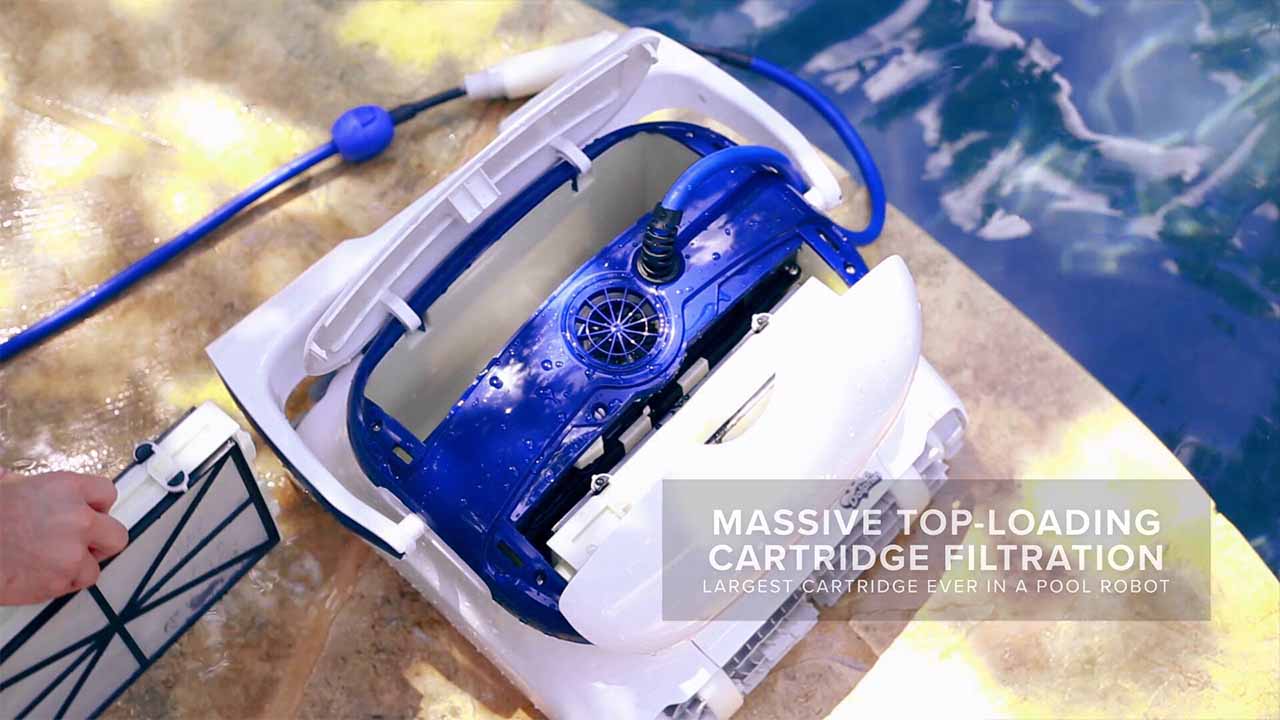
The Premier does the same three jobs as the Sigma on tile: floor, walls and waterline. It does them with dual scrubbing brushes instead of four and a 3-hour cycle, the longest on this page, so it trades brush count for time on the surface. Dual commercial-grade ProLine motors match the Sigma's 4,500 gallons per hour. Its Multi-Media system includes NanoFilters for grout dust. The weekly timer is set on the power supply: every day, every 2 days or every 3 days, no phone required. Warranty is 3 years.

$1799 $1599 SALE Save $200
Temporarily out of stock
Best for tiled steps and shelves
Many tile pools carry the tile onto steps, a bench or a sun shelf, and the Quantum is the one robot here whose published coverage includes sun shelves, Baja ledges and stairs along with floor, walls and waterline. Its dual HyperBrush spins at twice the speed of standard brushes, which suits grout: speed makes up for having two brushes. The XXL MaxBin basket opens from the top with one click, and a full set of NanoFilter panels is in the box. Flow is 4,000 gallons per hour and the cycle is 2 hours.

$1299 $1049 SALE Save $250
Temporarily out of stock
Floor and walls for tile pools to 33 ft
The Cayman lists tile among its published surfaces and cleans the floor and walls of pools up to 33 ft with one HyperBrush, spinning at twice the speed of standard Dolphin brushes. That covers grout on the floor and most of the wall. It does not scrub the waterline, and on tile that is a real omission: the band is where film shows first. Buy it when the pool is small, the budget is firm, and wiping the band by hand is acceptable. Its MaxBin basket empties through a top hatch, and its timer starts a cycle every day.
The criteria
The tile band is the most visible few inches of the pool. A robot that scrubs there every cycle keeps fresh film from baking on. The Sigma, Premier and Quantum do it. The Cayman and Escape clean floor and walls only, so the band stays a hand job.
Grout joints sit below the tile face, sheltered from water flow alone. It takes bristles. More brushes, or faster ones, mean more passes over each joint per cycle: four scrubbing brushes on the Sigma, two on the Premier, two high-speed HyperBrushes on the Quantum.
Glazed tile gives a track less to bite than plaster does. Every robot here runs on HyperGrip tracks. The water a robot pushes out also helps press it to the wall, so a loaded filter is a common reason a climber starts sliding.
What brushes pull out of grout is fine: silt, dead algae, the dust that turns a white grout line gray. Standard filters pass some of it back. NanoFilters come with the Sigma and Premier, NanoFilter panels with the Quantum; they are an optional add-on for the Cayman.
On paper
| Specification | Dolphin Sigma | Dolphin Premier | Dolphin Quantum | Dolphin Cayman |
|---|---|---|---|---|
| Price today | $2349 | $1949 | $1599 | $1049 |
| Brushes | Quad scrubbing brushes | Dual scrubbing brushes | Dual HyperBrush | HyperBrush |
| Cleans | Floor, walls and waterline | Floor, walls and waterline | Floor, walls, waterline, sun shelves and stairs | Floor and walls |
| Traction | HyperGrip tracks | HyperGrip tracks | HyperGrip tracks | HyperGrip tracks |
| Pool length | Up to 50 ft | Up to 50 ft | Up to 50 ft | Up to 33 ft |
| Filtration | NanoFilters and standard filter cartridges | Multi-Media: NanoFilters, oversized leaf bag and standard fine filters | XXL MaxBin basket with standard and NanoFilter panels | MaxBin basket with fine panels; NanoFilter panels optional |
| Robot weight | 24.6 lb | 20.3 lb | 18.3 lb | 14.6 lb |
| Warranty | 3 years | 3 years | 2 years | 2 years |
Two things build up on waterline tile, and a robot deals with only one. The first is soft film: sunscreen, body oil, pollen and the dirt that sticks to them. It forms in days and comes off with brushing while it is fresh. A robot that scrubs the waterline several times a week keeps it from building.
The second is calcium scale, the hard white crust that forms when minerals come out of the water at the evaporation line. Brushes do not remove it. No robot does. Scale is a water-balance problem first, managed through pH, alkalinity and calcium hardness, and a removal job second, done with a pumice stone on suitable tile, a scale remover or a professional cleaning.
Look at the grout before you choose. What you see there tells you how much brushing the pool needs, and whether a robot is the right first step.
A robot scrubs at the waterline it finds. If the water sits at the bottom edge of the tile band, the brushes work the bottom edge. Keep the level around the middle of the skimmer opening, which on most pools puts the surface mid-tile, and top up after heavy evaporation or a backwash.
On a fully tiled pool, check the filter more often than you would on plaster. Fine grout dirt loads a NanoFilter quickly, and a loaded filter is the usual cause of a robot that stops short of the top of a slick wall.
Owners ask
Mostly, yes. Rotating brushes reach into the joints and lift loose dirt and early algae film, and the filter collects it. How well depends on brush count and how often the robot runs. Stained or deeply colonized grout still needs hand brushing or regrouting.
No. Scale is mineral bonded to the glaze, and soft PVC brushes do not cut it. A robot that scrubs the waterline removes the fresh film that forms before scale and around it. For existing scale, correct the water balance and use a method suited to your tile.
The shortlist is the same; the priorities change. Plaster is rough enough that any tracked robot climbs it, so filtration and capacity lead. Tile is slick and jointed, so brush contact and waterline scrubbing lead. That is why the Sigma, with four brushes, ranks first here.
Often enough that film never gets old: every day or every second day in swimming season. The Sigma schedules by day and time in its app. The Premier and Quantum timers offer every day, every 2 days or every 3 days. The Cayman's timer runs every day.
On standard glazed pool tile, tracked robots climb in normal conditions, and tile is on the published surface list of every robot on this page. Climbing weakens when the filter is loaded, the brushes are worn or the tile carries a slippery film. On glass or unusually smooth tile, watch a test cycle first.
The verdict
Count the tile. If it covers the whole shell, buy brush contact: the Sigma. If tile is a band on a plaster or pebble pool, buy waterline scrubbing at the price that suits you: the Premier for a timer and a longer warranty, the Quantum for steps and shelves. If the pool is 33 ft or less and you will wipe the band yourself, the Cayman is enough. Fix scale with water balance, not with a robot.
Keep reading