Dolphin Escape
$959 $659 SALE Save $300
Temporarily out of stock


By pool type and installation
Top pick: Dolphin Escape
$659 today · Free shipping
Thin liners, flexible walls and shallow water rule out most robots. Two Dolphins are rated for above-ground pools, and for some soft-sided pools the honest answer is neither.
The short answer
Dolphin Escape is the robot for a soft-sided pool: rated for above-ground use, 14.2 lb, a 1.5-hour cycle and a 40 ft cable sized for these pools. Pick the Cayman for the largest frame pools, where its 50 ft cable reaches farther and it can clean every day unprompted. On a small, shallow ring pool, a robot is usually more than the pool justifies.
A soft-sided pool is a bag of water held up by an inflatable ring or a tube frame. The floor is a thin PVC liner laid over a ground cloth and whatever the lawn does underneath. The walls flex when you lean on them. The water is somewhere between 30 and 52 inches deep. Any search for the best robotic pool cleaner for soft-sided pools has to start with that construction.
It rules out the robots this site is known for. In-ground machines are heavier and built for rigid walls and a tile line. A soft-sided pool needs a robot rated for above-ground pools, light on the liner and easy to lift over a wall you cannot lean on. Two of the Dolphins in these guides fit that description. This page ranks them, then says plainly which pools should go without.
The ranking
$959 $659 SALE Save $300
Temporarily out of stock
The match for ring and frame pools
Everything about the Escape lines up with this kind of pool. It is rated for above-ground pools first, with vinyl liner on its published surface list and round, oval and rectangular shapes all covered. At 14.2 lb it is the lightest of the robots in this guide, so it goes over a flexible wall without anyone leaning on the frame.
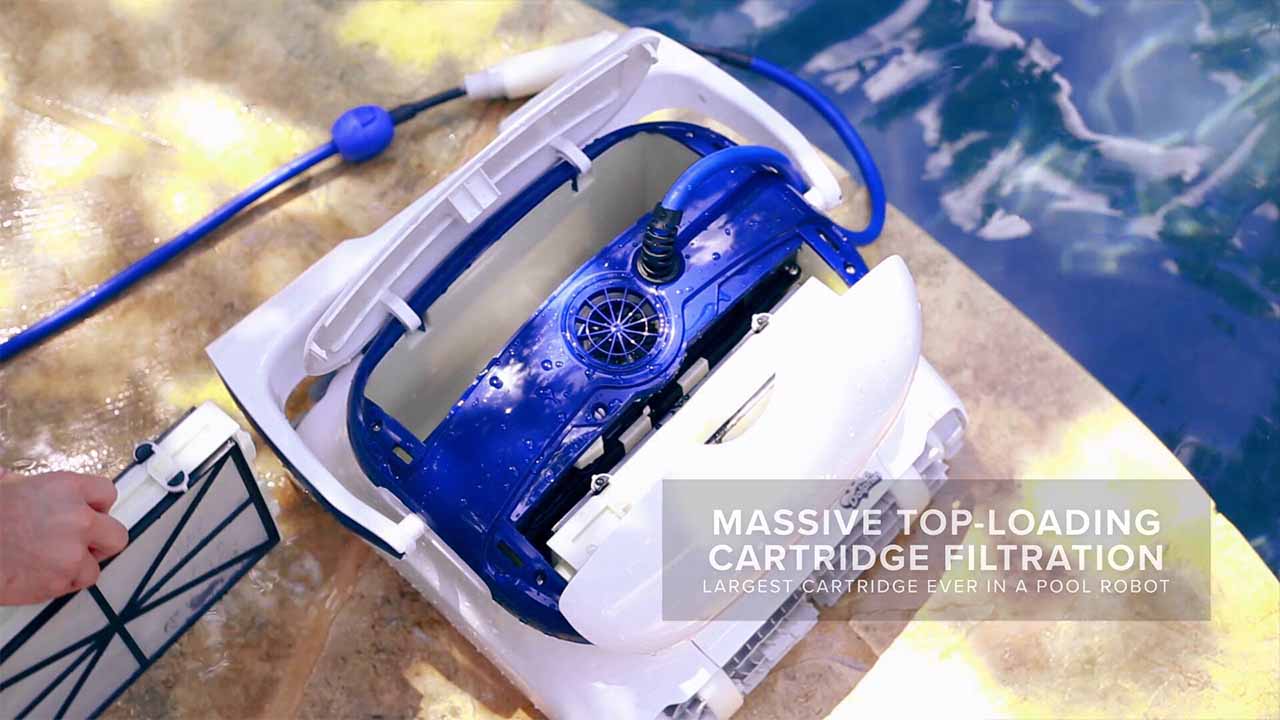
The cycle is 1.5 hours, short enough to run before an afternoon swim. One HyperBrush spinning at twice the speed of standard Dolphin brushes scrubs the liner, dual 24-volt DC motors move over 4,000 GPH, and the MaxBin basket lifts out from the top. Its 40 ft cable is sized for these pools instead of trailing spare length around the yard.

$1299 $1049 SALE Save $250
Temporarily out of stock
For the biggest frames and daily cleaning
The Cayman is the step up when the soft-sided pool is large, or when the owner wants it cleaned without thinking about it. It is rated for above-ground and in-ground pools up to 33 ft, and its cable is 50 ft, 10 ft more than the first pick's. On a long rectangular frame pool, that extra length is the difference between reaching the far corner and stopping short.
The timer on its power supply runs a cycle every day, the one setting it has, which suits a family pool in constant summer use. At 14.6 lb it is only fractionally heavier. The cycle is 2 hours, with one HyperBrush, over 4,000 GPH of flow and a MaxBin that empties through a top hatch with one tab.
The criteria
This is the entry requirement. A robot rated only for in-ground pools is designed around rigid walls and deeper water. In this guide, the two robots rated for above-ground pools are the two picks, and they are the only ones to consider.
A soft wall will not take your weight while you lower a robot in, and a thin floor over lumpy ground does not want a heavy machine dragged across it. Under 15 lb is the practical target. The two picks weigh 14.2 lb and 14.6 lb.
A robot has to stay fully submerged to hold the floor and keep water moving through its filter. Frame pools filled to 42 inches or more are comfortable. On a shallow ring pool a robot may not stay under. We do not quote a minimum depth; check the manual.
Robots climb by pressing against a wall that pushes back. A soft wall gives. Expect either pick to clean the floor thoroughly and the lower wall, and to climb less high than it would in a rigid pool.
The power supply sits on the ground outside the pool, set back by the distance in the manual, and the cable rises over the wall before it reaches the water. Measure that route to the far side. One pick carries 40 ft of cable, the other 50 ft.
On paper
| Specification | Dolphin Escape | Dolphin Cayman |
|---|---|---|
| Price today | $659 | $1049 |
| Pool type | Above-ground and in-ground | In-ground and above-ground |
| Pool length | Up to 33 ft | Up to 33 ft |
| Cleans | Floor and walls | Floor and walls |
| Cable | 40 ft | 50 ft |
| Filtration | MaxBin basket; NanoFilter panels optional | MaxBin basket with fine panels; NanoFilter panels optional |
| Robot weight | 14.2 lb | 14.6 lb |
| Warranty | 2 years | 2 years |
An inflatable-ring pool gets its shape from the water. The wall leans inward toward the ring, the floor edge is rounded, and many are filled to well under three feet. That geometry is hard on a robot: there is little wall to work with and it can ride up the slope and break the surface.
A frame pool is a better platform. Near-vertical walls, a flatter floor and 42 to 52 inches of water give a robot room to work. As a rule of thumb, treat frame pools of about 15 ft and larger as robot territory, and smaller or shallower pools as optional at best.
Most problems in a soft-sided pool start under the liner. Tracks and brush follow the floor, and a wrinkle, a fold of ground cloth or a root gives the robot something to catch on or steer around. Wrinkles you cannot remove will not stop a robot, but debris collects along them, so brush those lines toward open floor before a cycle.
Be realistic about the math. A small seasonal pool can cost less than the robot that would clean it. If the pool is under about 12 ft, comes down every September and takes ten minutes to vacuum by hand, spend the money elsewhere.
A robot earns its place when the pool is large, stays up all summer or longer, and sits near trees or a lawn that sheds into it. The filter pump supplied with most of these pools is modest; a robot runs independently of it, with its own motors and filter, and takes the floor debris off its hands. Either pick also moves with you to a rigid above-ground pool or a small in-ground one later. A certified open-box robot narrows the cost gap.
Neither pick cleans the waterline, and on a soft wall neither would climb to it reliably anyway. The scum line under the ring or top rail wipes off with a soft cloth. Neither replaces the pump's circulation or the sanitizer: a robot removes debris, it does not treat water.
Lift the robot out by its handle, never the cable, rinse the basket, and keep it in the shade. When the pool is drained for winter, the robot is stored dry indoors until the next setup.
Owners ask
Both picks list vinyl liner among their published surfaces, so normal operation is not the concern. The concern is what lies under the liner: a stone or root that creates a hard point. Smooth the base, and check the brush and tracks for trapped grit before each run. We cannot promise anything for a liner already brittle from sun.
Deep enough that the robot stays fully submerged while it moves and starts up a wall. We do not quote a minimum because the figure belongs in the manual for each model. In practice, frame pools filled to around 42 inches or more work well, and ring pools with a couple of feet of water often do not.
Partly. It will work the base of the wall and climb some way, but a wall that flexes gives the robot less to push against than steel or concrete. Plan on a clean floor and lower wall from the robot, and wipe the upper wall by hand.
For a small one, usually yes. For a large frame pool that stays up for months and collects leaves and grass, no: it takes over the hand-vacuuming a pool that size demands. The best robotic pool cleaner for soft-sided pools is one whose cost you will spread over several summers.
That is what the first cycles are for. We offer a 30-day in-pool trial with free exchanges and no restocking fees, which matters here: if the first run shows the cable is short for your layout, you can move to the longer-cabled pick.
The verdict
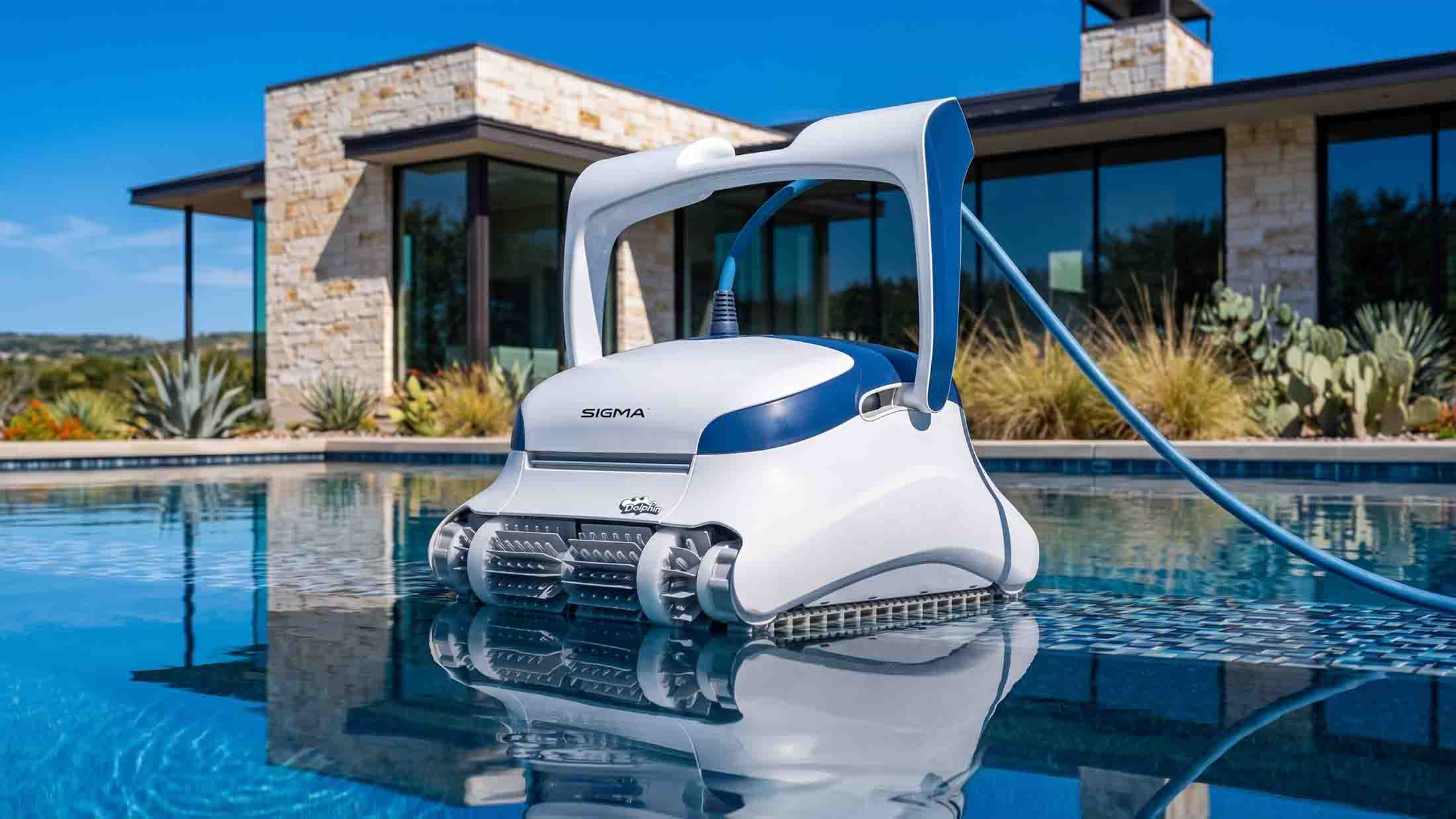
If the pool is a small or shallow ring pool, skip the robot. If it is a frame pool of about 15 ft or more that stays up all summer, buy the Escape. If it is one of the largest rectangles or ovals, or you want a cycle every day without pressing a button, buy the Cayman. Leave the in-ground robots, the Sigma included, for in-ground pools.
Keep reading