Dolphin Sigma
$2999 $2349 SALE Save $650
Temporarily out of stock


By debris and dirt problem
Top pick: Dolphin Sigma
$2349 today · Free shipping
Silt is finer than sand and far harder to pin down. Clearing it takes ultra-fine filters, still water and more than one cycle. Here is which robot, and when not to use one.
The short answer
The Dolphin Sigma is our top pick for silt: its included NanoFilters hold what standard filters pass, three ProLine motors keep 4,500 gallons per hour moving through them, and the app flags a loaded filter. The Dolphin Premier offers the same NanoFilters and flow with simpler controls. Whichever you choose, let the silt settle with the pump off first, and expect several cycles.
Silt is what a flooded yard, a dust storm or a washed-out planter bed leaves behind: mineral particles finer than sand, light enough to hang in the water for hours. It settles as a smooth tan film that shows every footprint, and it lifts into a cloud the moment anything touches it. That behavior is why the best robotic pool cleaner for silt is chosen almost entirely on filtration.
A standard robot filter passes silt straight through. The robot looks busy, the floor looks better for an hour, and the film is back by morning. Ultra-fine media changes that. It comes included with the Sigma, the Premier and the Dolphin Quantum, and as an optional add-on for the Dolphin Cayman. Even then, silt rewards patience more than horsepower, and a severe case calls for a different tool first.
The ranking
$2999 $2349 SALE Save $650
Temporarily out of stock
Top pick for silt in pools up to 50 ft
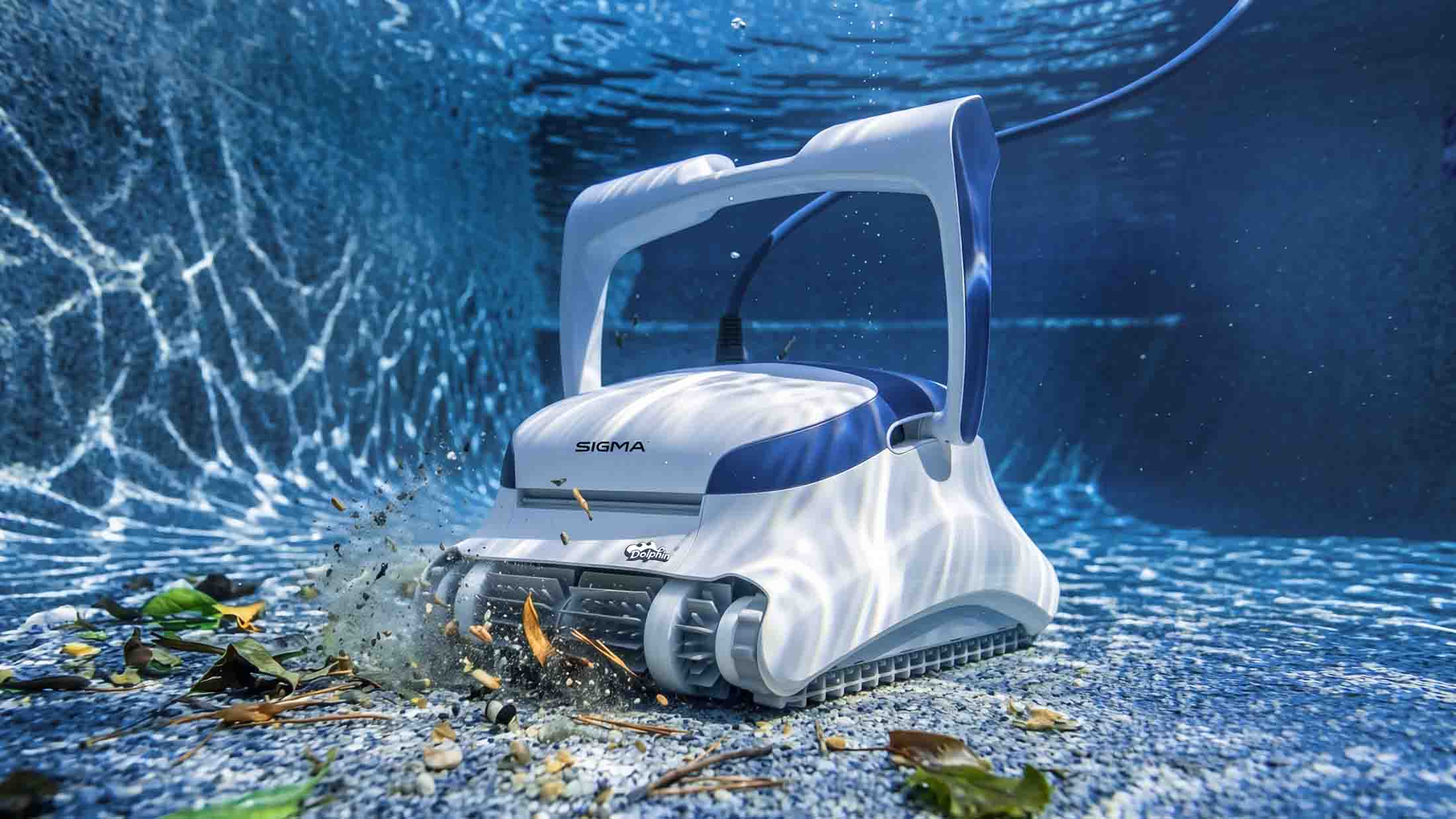
Silt needs ultra-fine media and enough motor to keep water moving through it. The Sigma includes NanoFilters and drives them with three commercial-grade ProLine motors at 4,500 gallons per hour. When silt coats the media and flow begins to fall, the myDolphin Plus app sends a filter alert, so you rinse at the right moment instead of finding out after a wasted cycle.
SmartNav 3.0 with a gyroscope works the floor in an ordered pattern, and four scrubbing brushes loosen film from the floor, the walls and the waterline, where silt leaves a tan line.

$2499 $1949 SALE Save $550
Temporarily out of stock
NanoFilters with a filter light on the power supply
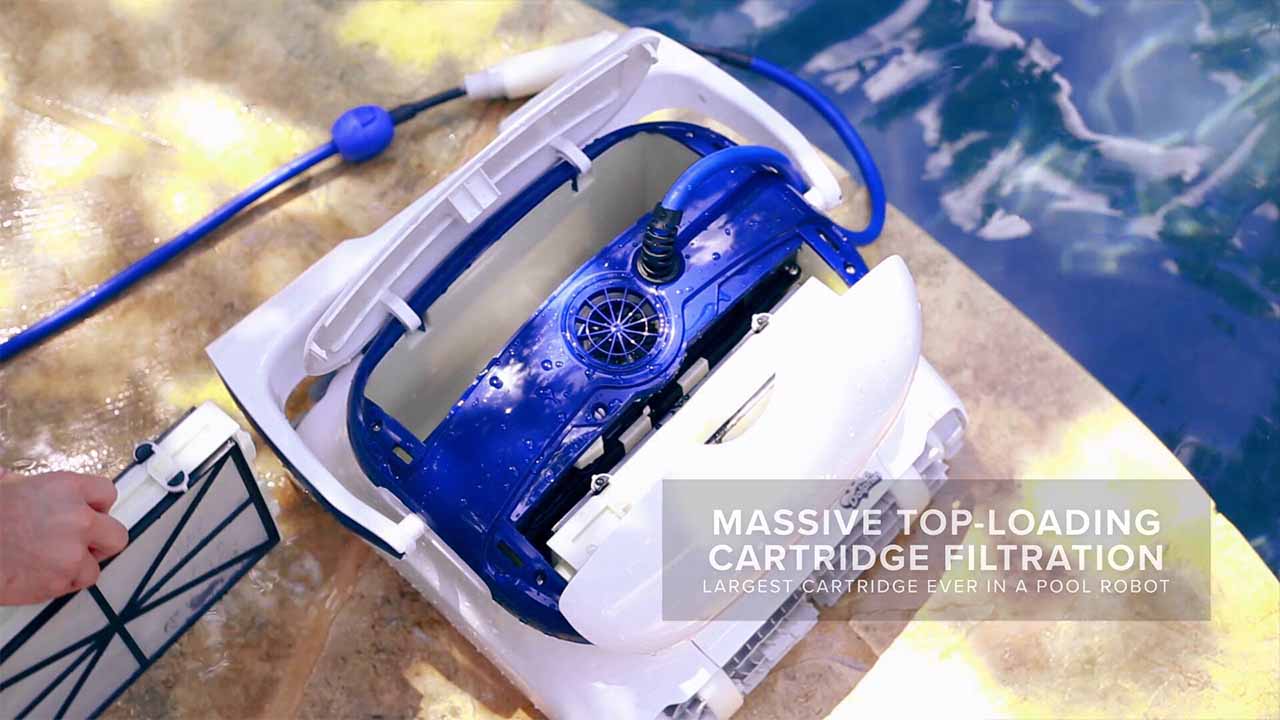
The Premier brings the same two things silt requires: NanoFilters in the box and 4,500 gallons per hour, here from dual ProLine motors. Its Multi-Media filter loads from the top and swaps in seconds with no tools, which matters when you are rinsing between cycles all weekend. The full-filter indicator sits on the power supply, visible from the deck.
Its 3-hour cycle is the longest here, a slow and thorough pass over a settled film. When the cleanup is done, the included standard fine filters go back in for everyday use.

$1799 $1599 SALE Save $200
Temporarily out of stock
Panels included, widest filter area here
The Quantum includes a full set of NanoFilter panels for its XXL MaxBin basket, which has over 400 sq in of filter area. With silt, area buys time: a larger surface takes longer to blind. The basket releases from the top with one click and the panels rinse in plain view.
Flow is 4,000 gallons per hour from dual commercial-grade motors, and two HyperBrushes at twice the speed of standard brushes lift film from the floor, walls and waterline. It also cleans stairs and ledges, flat surfaces that collect silt like any other. Of the three 50 ft picks it costs the least; check the live price on the card.

$1299 $1049 SALE Save $250
Temporarily out of stock
Only with NanoFilter panels added
Take this pick with its condition attached. On the fine panels it ships with, the Cayman will mostly stir silt: lift it, pass it and let it settle again. Add the optional NanoFilter panels and it becomes a sound choice for pools of 33 ft and under, in-ground or above-ground.
Then its strengths apply: over 4,000 gallons per hour from dual 24-volt DC motors, a MaxBin basket 50% larger than standard Dolphin filters, and a top hatch that empties with one tab. The same condition holds for the Escape, which is why it is not ranked here.
The criteria
Nothing else counts until this is right. NanoFilters on the Sigma and Premier, and NanoFilter panels on the Quantum, are the ultra-fine grade. Standard panels are built for leaves and grit. Run them on silt and the robot recirculates most of what it lifts.
Silt blinds a filter quickly, coating the media in a layer that slows the water. A higher flow rating leaves more margin before the robot loses pull. The Sigma and Premier lead at 4,500 gallons per hour.
A silt-loaded filter looks only faintly dirty but works poorly. A warning saves wasted cycles: the Sigma sends a filter alert through its app, and the Premier shows a full-filter indicator on its power supply.
You will rinse filters between every cycle, sometimes mid-cycle. Media that comes out quickly and hoses clean in the open makes a three-cycle cleanup tolerable. The Premier and Quantum both load from the top.
On paper
| Specification | Dolphin Sigma | Dolphin Premier | Dolphin Quantum | Dolphin Cayman |
|---|---|---|---|---|
| Price today | $2349 | $1949 | $1599 | $1049 |
| Filtration | NanoFilters and standard filter cartridges | Multi-Media: NanoFilters, oversized leaf bag and standard fine filters | XXL MaxBin basket with standard and NanoFilter panels | MaxBin basket with fine panels; NanoFilter panels optional |
| Filter access | Cartridges | Top-load, no tools | Top-load, one-click open | Top hatch, one-tab emptying |
| Brushes | Quad scrubbing brushes | Dual scrubbing brushes | Dual HyperBrush | HyperBrush |
| Flow rate | 4,500 GPH | 4,500 GPH | 4,000 GPH | Over 4,000 GPH |
| Cycle time | 2.5 hours | 3 hours | 2 hours | 2 hours |
| Cleans | Floor, walls and waterline | Floor, walls and waterline | Floor, walls, waterline, sun shelves and stairs | Floor and walls |
| Scheduling | Weekly scheduler by day and time | Weekly timer: every day, every 2 days or every 3 days | Weekly timer: every day, every 2 days or every 3 days | Timer: every day |
| Warranty | 3 years | 3 years | 2 years | 2 years |
A robot collects what is on the floor. Silt still hanging in the water passes over it. So the first step is to stop moving the water: switch the pool pump off and leave it off for several hours, long enough for the haze to drop and the floor film to thicken. Keep swimmers and pool toys out.
Then lower the robot in gently and let it run one full cycle undisturbed. Treat that first pass as the slow one: no brushing, no skimming, nothing to lift the film ahead of the robot. Rinse the filter when the cycle ends, restart the pump for a few hours so the pool filter takes the suspended share, then switch off and repeat. After a flood or a dust event, several rounds is normal.
A robot is the right tool for a film. It is the wrong first tool for a layer. If you cannot see the floor, or silt lies thick enough to hold a handprint, any robot filter will blind almost at once and you will spend the day rinsing.
The faster route is chemical and manual. A clarifier gathers fine particles so the pool filter can catch them. A flocculant drops them to the floor in a heavy layer, which is then vacuumed to waste: out of the pool through the filter valve's waste setting, bypassing every filter. That costs water and needs a valve with a waste position, so follow the product label and your equipment manual. Afterward, a robot with ultra-fine media clears the residue. Take the robot out of the pool before adding any chemical.
Owners ask
Grain size and behavior. Sand is gritty, sinks immediately and stays where it lands. Silt is far finer, feels smooth or floury between the fingers, hangs in the water for hours and lifts into a cloud when disturbed. Sand can often be collected on standard filters. Silt needs ultra-fine media and still water.
Two usual reasons. Either the filter was too coarse and passed the silt back into the water, or part of the silt was still suspended during the cycle and settled afterward. Fit NanoFilters or NanoFilter panels, turn the pump off for several hours before the run, and repeat. A source still feeding the pool is the third possibility.
Several hours with the pump off is the working minimum; overnight is better after a flood or dust storm. You are waiting for the water to clear and the film on the floor to stop thickening. If the water is still hazy, more silt is on its way down and a cycle now will miss it.
For a light film, yes: it saves water and needs no one on the pole. For a heavy layer, no. Vacuuming to waste removes silt from the pool without passing it through any filter, which is quicker when there is a lot of it. Many cleanups use both, waste first and robot after.
The verdict
Buy for the filter, then for the flow behind it. The Sigma is the pick when silt returns often to a pool up to 50 ft and you want a warning before the filter blinds. The Premier does the same work with controls on the power supply. The Quantum includes its ultra-fine panels at a lower price. The Cayman belongs on the list only with NanoFilter panels fitted. Then turn the pump off and give it time. Our Price Match Guarantee covers every robot.
Keep reading